
Chapter 165 of 178 · Mises: The Last Knight of Liberalism by Jörg Guido Hülsmann
Christianity Reconsidered
One of the most striking features of Theory and History and The Ultimate Foundation of Economic Science is the frequent allusion to theological problems. At the same time, there is an equally noticeable change of nuance in the discussion of religion, and of the Christian faith in particular. Whereas in Socialism and Human Action Mises had been skeptical that Christianity could ever be reconciled with the principles of a free society, in the late 1950s and early 1960s he had lost much of this skepticism. Consider the following statement from the first edition of Socialism (1922):
[Our] evidence leads to the negation of the question asked above: whether it might not be possible to reconcile Christianity with a free social order based on private ownership in the means of production. A living Christianity cannot exist side by side with, and within, Capitalism.56
By 1949, he had reached an intermediate phase in which he thoroughly distinguished between theocracy and religion. The latter was not necessarily in contradiction with classical liberalism, provided that it did not impose its views on mankind. The pious just had to tolerate debate on issues they found sensitive, such as birth control and divorce. Moreover, Mises seemed to prefer the kind of religion that was a purely inward affair for each individual. It was not allowed to have any social impact whatever. He referred at length to the work of William James, for whom religion was
a purely personal and individual relation between man and a holy, mysterious, and awe-inspiring divine Reality. It enjoins upon man a certain mode of individual conduct. But it does not assert anything with regard to the problems of social organization57
Eight years later, Mises had moved still closer to the Christian position. We read in Theory and History:
There is nothing in any ethical doctrine or in the teachings of any of the creeds based on the Ten Commandments that could justify the condemnation of an economic system which has multiplied the population and provides the masses in the capitalistic countries with the highest standard of living ever attained in history. From the religious point of view, too, the drop in infant mortality, the prolongation of the average length of life, the successful fight against plagues and disease, the disappearance of famines, illiteracy, and superstition tell in favor of capitalism.58
In the same work, he stressed that it was “justifiable if ethics and religion tell people that they ought to make better use of the well-being that capitalism brings them.” And he even pointed out that the champions of natural-law theory had anticipated at least some discoveries of the economists.59 He merely admonished that it was “irresponsible to condemn one social system and to recommend its replacement by another system without having fully investigated the economic consequences of each.”60 And another five years later he wrote in The Ultimate Foundation of Economic Science:
According to the fundamental doctrine of Christian theology and philosophy, God has created the human mind in endowing man with his faculty of thinking. As both revelation and human reason are manifestations of the Lord's might, there cannot be ultimately any disagreement between them. God does not contradict himself. It is the object of philosophy and theology to demonstrate the concord between revelation and reason. Such was the problem the solution of which patristic and scholastic philosophy tried to achieve.61
One intellectual influence that seems to have contributed to the formation of Mises's mature judgment on the relationship between economic science, liberalism, and the Christian faith was apparently Karl Barth, whose work he probably started reading in the 1950s.62 In Barth's theology, God is the “wholly other” who could not possibly be grasped in terms of human reason. Barth made a passionate case for revealed theology and against the intellectualist presumptions of natural theology.63 This line of argument appealed to the extreme rationalist in Mises, who must have been intrigued to find in Barth a brother in spirit when it came to pointing out the contradictions of the notion of an “acting God.” He acknowledged:
The repudiation of naive anthropomorphism that imagined a supreme being either as a dictator or as a watchmaker was an achievement of theology and of metaphysics. With regard to the doctrine that God is wholly other than man and that his essence and nature cannot be grasped by mortal man, the natural sciences and a philosophy derived from them have nothing to say. The transcendent is beyond the realm about which physics and physiology convey information. Logic can neither prove nor disprove the core of theological doctrines. All that science—apart from history—can do in this regard is to expose the fallacies of magic and fetishistic superstitions and practices.64
Government interventionism and socialism clearly fell into the latter category. Mises argued:
A conscientious moralist or churchman would not consider meddling in controversies concerning technological or therapeutical methods without having sufficiently familiarized himself with all the physical, chemical and physiological problems involved. Yet many of them think that ignorance of economics is no bar to handling economic issues.... The truth is that those fighting capitalism as a system contrary to the principles of morals and religion have uncritically and lightheartedly adopted all the economic teachings of the socialists and communists. Like the Marxians, they ascribe all ills—economic crises, unemployment, poverty, crime, and many other evils—to the operation of capitalism, and everything that is satisfactory—the higher standard of living in the capitalistic countries, the progress of technology, the drop in mortality rates, and so on—to the operation of government and of the labor unions. They have unwittingly espoused all the tenets of Marxism minus its—merely incidental—atheism. This surrender of philosophical ethics and of religion to the anticapitalistic teachings is the greatest triumph of socialist and interventionist propaganda. It is bound to degrade philosophical ethics and religion to mere auxiliaries of the forces seeking the destruction of Western civilization.65
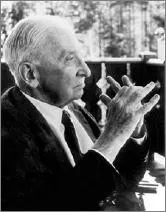
One of Margit's favorite pictures of Lu
Mises: The Last Knight of Liberalism
Read the whole book online · Book details
Published here by permission of Jörg Guido Hülsmann. This work is still in copyright: free to read and download from this archive, but not licensed for re-publication elsewhere.