
Chapter 119 of 178 · Mises: The Last Knight of Liberalism by Jörg Guido Hülsmann
Escape from Europe
The summer of 1939 was exceptionally beautiful. Ludwig and Margit spent a vacation in Aix-les-Bains, which had a magnificently Alpine setting, almost as Bad Gastein, their regular vacation spot in Austria.121 Richard von Mises paid them a visit on his way to the United States. In June he had come to the conclusion that Turkey was no longer safe and decided to accept a visiting position at Harvard University.122 He would soon learn how good his timing was.
The war broke out on September 1, 1939, when Mises must have been in the process of reviewing the proof pages of his Nationalökonomie. Strangely enough, during the first eight months of the war, everything was quiet on the western front. The governments of France and Britain had declared war on Germany in fulfillment of the guarantees they had extended to Poland. But they did nothing to prevent the Wehrmacht from completing its invasion of Poland within two weeks; and they did not even declare war on the Soviet Union, which also invaded Poland, in visible execution of a secret agreement between Hitler and Stalin to divide Poland between them—thus continuing the tradition of Frederick II and Catherine II.
The simple fact was that France and Britain were utterly unprepared for a new war—militarily, economically, and mentally. There was widespread sentiment, especially in France, that the cause was not worth another round of mass slaughter. They believed that World War I had been fought in vain, and the Treaty of Versailles had humiliated the Germans without creating justice. It had given protection to former ethnic minorities through the creation of the Czechoslovak and Polish states, but the Germans who remained there were now exposed to an oppression that was virtually indistinguishable from the one that the Czechs, Slovaks, and Poles had experienced in pre-1914 Germany and Austria. Under Hitler, the Germans set out finally to protect their co-nationals in the East, and a great number of western Europeans found this foreign policy unobjectionable. This attitude did not express passivity or apathy. It resulted naturally from the political dogma that ruled the West in those days, namely, that ethnic self-determination was the highest political principle.
But while most citizens of the West did not feel the Wehrmacht threatened their existence, their governments were ready to draw a line in the sand. In September 1939, the resolution to stop Hitler was not much more than a moral resolve—a resolve, moreover, that was half-baked and corrupted by several years of “anti-fascist” lobbying by the Bolshevists in Geneva. But it marked the beginning of the efforts that would eventually lead to the German defeat in World War II.
Mises was silent on the subject, but Margit became nervous. In anticipation of a German invasion, she asked him to consider emigration to America or elsewhere. Reluctantly, Mises began to explore the possibility in correspondence with his brother Richard and Fritz Machlup, both of whom had already crossed the Atlantic.123 Machlup had discussed the idea of a “California vacation” for Mises with Benjamin Anderson and other friends from the University of California. Anderson had just moved to the Los Angeles campus of the University of California and was the most influential man in the hitherto unprestigious department of economics. UCLA showed interest, and the chairman of the department wrote two letters to Machlup, who then mediated between the two parties. In this process things got mixed up. At first Mises declined when Machlup told him UCLA could offer only a comparatively low salary.124 Mises asked his friend to tell Dudley Pegrum, the chair of the department, that his Austrian passport had expired and that he could therefore not accept the offer at the moment, and would be grateful if the invitation could be postponed a year. While Mises's letter was on its way, Machlup wrote again, this time pointing out that an invitation from UCLA would “procure you a permanent non-quota immigration visa for the United States, which might be considered an asset these days.”125 This convinced Mises. Meanwhile he had received a cable from his friend Unger, a former Geneva student of his, who was already in New York City and who told him in telegraphic language that he, Mises, was making a mistake. As soon as he received Machlup's letter on February 28, Mises wrote back that his concerns about passport and visa questions had been dispelled and that he would be ready to go to California. If he had cabled this message to Machlup, Mises might have begun a career in California in August 1940, and history would have been different. But Mises sent the letter by surface mail, and it reached Machlup only after he had already declined the offer on Mises's behalf. When Machlup wrote to Anderson “trying as diplomatically as I could to reopen the negotiations” he received a response from Anderson's secretary that her boss was on a short vacation.126 One month later, Pegrum gave him a definitive no.
Meanwhile, Mises himself had been in touch with Anderson, though on less vital matters. In March 1940, Nationalökonomie was at the printer, and there was no sign that the war would soon reach Western Europe.127 To most citizens of the West it was not clear that it ever would. Writing Mises from his new position in Los Angeles, Benjamin Anderson announced his intention to come to Europe in the summer. He hesitated to do so, though not from fear of danger:
I have a feeling that coming to Europe at this time, even to the neutral States, is almost like going to a friend's house when a member of the family is undergoing an operation, and that I might simply be an additional burden on busy and wary men who have more important things to do than to carry on discussions with a foreign economist.128
In his response, Mises assured his American friend that these fears were groundless: “Your doubts about a visit in Europe are unfounded. It is just the right time for you to come and to see what is going on.”129
Mises had been convinced that the new war would start just as the last war had ended—in the trenches. He was convinced that France and its allies would withstand any German attack. Modern conditions had made defense the most effective military strategy:
But the time of battles of the old style, which permitted getting around the opponent's flank, was past on the great European theaters of war, since the massiveness of the armies and the tactics that had been reshaped by modern weapons and means of communication offered the possibility of arranging the armies in such a way that a flank attack was no longer possible. Flanks that rest on the sea or on neutral territory cannot be gotten around. Only frontal attack still remains, but it fails against an equally well armed opponent.130
With these comforting thoughts in his mind, Mises had the pleasure of holding in his hands the freshly bound Nationalökonomie, the work of a lifetime. The joy lasted only for a few days before it was overwhelmed by unexpected and devastating news. In May 1940, the Wehrmacht ended the “phony war” and overran Western Europe in a series of blitzkrieg attacks. Mises was completely taken by surprise. He had not realized that conditions had once again changed profoundly. Tank divisions had become sufficiently fast to attack the flanks of even very large armies, especially when the divisions operated under air support. A few military theoreticians had perceived this threat during the interwar period, but it was only in the spring of 1940 that General Heinz Guderian and his men proved the threat a reality.131 Mises could hardly believe what he read in the newspapers. “Belgium! Holland!” he exclaimed in his notebook on May 10. Less than two weeks later, Guderian reached the Channel and cut off the allied supply lines. The British escaped at Dunkirk and now the Germans took on the eighty-some remaining French divisions one by one.132 On June 14, Mises exclaimed again: “Paris!” and three days later “Armistice!” It was an ordeal. May 1940 was, as he later recalled, “the most disastrous month of Europe's history.”133 It was the only time he was ever wrong in forecasting an important political or economic event.
After the allied debacle at Dunkirk, Mises knew it was a question of days or weeks before it would be impossible to leave Geneva. His residence in Geneva would soon be unsafe. He had to act. He was high on the German government's list of wanted men. The Germans had already tried to kidnap him and had almost succeeded. They had already been pressuring the Swiss authorities to surrender Mises. The Swiss had refused, but they had also let Mises know they had acted out of charity, and that his visa was still subject to extension on a yearly basis. This situation was already dangerous (and insulting) when the Germans were still on the other side of the Alps. But now the Axis troops were about to encircle Switzerland from all sides, and Mises felt his days in Geneva were numbered.
Hans Kelsen and Wilhelm Röpke were in the same situation. At least for some time, Rappard and Mantoux planned to provide all three of them with jobs in Vichy France. But neither of them believed this was sufficient protection, and during the next days and weeks they actively sought admission to the United States—which they received within two weeks of the capitulation of Paris.134 Holding their invitation letters for the United States in his hands, Mises and Röpke weighed again the pros and cons of another emigration. Eventually Mises and Kelsen left, while Wilhelm Röpke remained in Switzerland. Röpke too was high on the Nazi list of wanted men and was thus at the mercy of the Swiss authorities. But he was courageous and trusted that the influence of his friends would keep him in the country; he believed that sooner or later the West would win this war against Germany, as it had won the last one.135 This was apparently the prevailing opinion in their circle. Hayek wrote to Mises:
I agree with all you say about the prospects. I have no doubt that we shall have a dreadful time but that in the end we shall win. But the old Europe we shall never see again.... It does not seem unlikely that at some future date we shall all rejoin on the other side of the ocean. I have no intention of running away while the war lasts, but after it I may find that if I want to continue my work at all I may have to follow you.136
In retrospect one might think that Röpke's decision was the correct one. Mises could have remained in Geneva, where he had spent some of the happiest years of his life and enjoyed ideal conditions for his scholarly work. For him personally, the U.S. move was a disaster. But what would the world of ideas and the world at large look like today had Mises remained in Europe? He might never have written in English. Human Action would not have seen the light of day, and thus would not have reached the group of brilliant students whom Mises inspired in the New York of the 1950s and 60s—those students who carry on his ideas to this day.
Mises now accepted an invitation to Berkeley that Machlup arranged to be sent to him by radiogram on May 16.137 He quickly proceeded to get his paperwork done: visa, transatlantic fare from Lisbon to New York, etc. This took a few weeks, however, which proved to be too long. Kelsen had departed on May 28 with the last plane leaving Switzerland from Locarno to Barcelona. When Ludwig and Margit were ready to go, Italy had entered the war on the German side, attacking France on its southeastern flank. Although the Italian onslaught was unsuccessful, it still made air travel out of Switzerland impossible. The German and Italian armies were about to close the circle around Switzerland. Already they controlled air traffic and would not allow unauthorized planes to leave the country. There was just one escape route left: by bus, but it would take them until July 3 to obtain passage.138 On the afternoon of that day, a Wednesday, they were told they could leave with the American Express motorcar on the following morning at six o'clock. Although the suitcases had been packed for many days, there was no more time for last visits with Mantoux and Rappard. Mises wrote a good-bye letter and left.139
The Germans had not yet occupied the entire French territory between the Swiss and the Spanish border, but their troops were already setting up control posts at strategically important intersections. The bus driver therefore had to drive through the German lines, avoiding any direct contact with them. Fortunately, he was experienced and cautious, and he could rely on the help of the local population. Again and again he stopped to talk to people who would alert him to the presence of German troops in his path. Then he would leave the highway and take a detour on some of the more obscure lanes, often driving miles out of the way. From their windows, the passengers saw women standing in line for bread. They learned that butter was unavailable and that meat had become very scarce. The bus of predominantly Jewish refugees moved slowly but steadily through several southeastern provinces of France. Every stop must have made them anxious; each bit of news about German troops ahead fuelled their fear, each of the many detours ate away at their nerves. Margit got upset about the couple sitting in front of them—young Charles Kindleberger and his pregnant wife—because they insisted on keeping the window open. Nerves. The ride must have seemed endless, but eventually, at the end of the day, they reached the Spanish border at Cerbères.
Here they learned at the inspection house of the Spanish authorities that the border had already been closed for a week. A diplomatic solution had been found only for American and English citizens, who were allowed to enter Spain and continue their trip. On the next day, the Swiss citizens were granted entry for similar diplomatic reasons—which meant in practice that the Portuguese and the Jewish passengers of German and Austrian origin were left stuck at the border. They stayed the night in hotels on the French side, where Ludwig and Margit found cheap accommodation. The Spanish officers had advised them to talk to the Spanish Consul in the nearby city of Perpignan. The consul found their papers in good order and wrote a letter of recommendation to the border officers, but to no avail. The officers now insisted they needed a special order from Madrid and also claimed (falsely, it turned out) that the passengers' Portuguese visas were no longer valid.
It was Saturday. Two days wasted. How far were the Nazi troops from Cerbères? Mises had to act and did the only thing he could do on a Saturday afternoon: send cables soliciting the help of William Rappard and Louis Rougier.140
Rougier had joined the new French government of Marshal Pétain. The hour of glory for the octogenarian Marshal Pétain had been World War I, which had turned him into one of France's greatest heroes. Now he had agreed to lead his country in its darkest hour, because those who had steered France into the current debacle had abandoned their positions and fled the country in panic. He could rely only on a handful of men, one of whom was Rougier, whom he used as a foreign liaison officer with his British ally and possibly also with Spain. Rougier therefore had the necessary personal connections to plead on behalf of Mises and the other stranded bus passengers. Somehow Mises managed to get in touch with his office and was told to get new visas at the Spanish consulate in Perpignan. Meanwhile, Rappard had taken care of the Portuguese visa problem.
On Monday, July 8, Mises traveled by train to Toulouse, alone, taking the passports of all the remaining bus passengers with him. From Toulouse, where he received the new Portuguese visas, he went to Perpignan to obtain the new Spanish stamps. It was late at night when he returned to the border town where the other passengers had been waiting for him with anxiety. He had visas for everybody except the Portuguese.
The next morning, the bus drove again to the border control station, and this time it was allowed to pass. After six days of paralysis in a “very difficult situation that seemed to be without issue,” as Mises later wrote, the passengers received a new lease on their lives.141
It took them a few hours to reach Barcelona where they reserved places on the next available plane to Lisbon. Upon their arrival in Portugal, Mises lost no time getting in touch with his travel agent. The ship for which they had made reservations had already departed. The next ship for which bookings were still available left in three weeks. Mises arranged two places on the waiting list. Renting a room in the Park Hotel, they lived out of a single suitcase and would not unpack any of the others, so as to be ready for immediate departure.
As it turned out, they only spent a few days in Lisbon. Margit was amazed to see that her husband seemed to have friends and colleagues everywhere—the city was full of foreigners waiting for passage to America. They visited with a couple of academics and former colleagues from the International Chamber of Commerce. She herself was mainly concerned about the fate of her daughter Gitta. Hayek made inquiries, but could not get in touch with the director of her school in France.
The morning of Thursday, July 25, 1940, Margit received a call from the travel agent. There was a cabin available on a ship leaving in a few hours. They had to move fast.
That same day, Ludwig and Margit von Mises left Europe on a ship called the Europe. It would take almost eight years for Mises to again set foot east of the Atlantic. By then he would be an American citizen, on his way to rebuilding the Austrian School of economics in the United States.
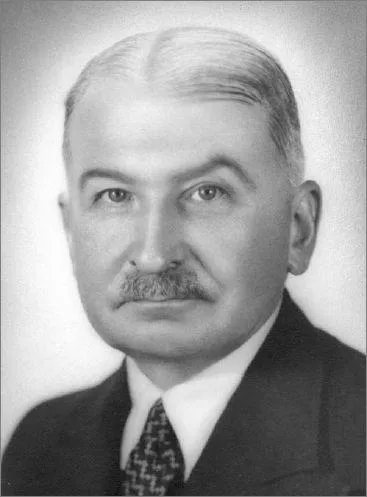
Mises in 1944
Mises: The Last Knight of Liberalism
Read the whole book online · Book details
Published here by permission of Jörg Guido Hülsmann. This work is still in copyright: free to read and download from this archive, but not licensed for re-publication elsewhere.