
Chapter 140 of 178 · Mises: The Last Knight of Liberalism by Jörg Guido Hülsmann
Leonard Read and the FEE
Leonard Read and FEE
About a year after the inception of Mises's NYU lectures, another institution would be established that would prove to be a pillar of the classical-liberal renaissance and give further leverage to Mises's ideas. Leonard Read had come to the conclusion that his engagement with the National Industrial Conference Board was a waste of time and money. One of the main reasons for this ineffectiveness was that the Board was committed to a policy of “hearing both sides.” In practice this meant, for example, that at the bimonthly public conferences that the Board sponsored at the Waldorf-Astoria, both the champions of the free market and the advocates of government intervention were granted equal time to present their cases. Leonard Read believed this policy was based on a severe misunderstanding of what hearing both sides truly meant in the present context. In the words of his biographer:
The “other side” was everywhere—in government, education, and communication. Even businessmen had come to rely on government for restrictions of competition, for government contracts and orders, easy money and credit, and other favors.... How do you present “both sides” when “one side” is all around you, pre-empting the public discussion, and the “other side” is barely audible in the deafening noise of the former?23
Read thought any funds spent on yet another presentation of the statist view was money down the drain, and he felt he could not in good conscience justify this expenditure. At the end of 1945, he resigned his position and started visiting the donors to apologize.24 One of them, New York City businessman Pierre Goodrich, encouraged Read to think about setting up his own organization. Two months later, Read established the Foundation for Economic Education (FEE), which in July 1946 would move to the pastoral premises in Irvington-on-Hudson, several miles north of Manhattan, where it is still located.
Read mobilized substantial corporate backing for this venture. He had a full address book and was personally acquainted with many executives and owners of the large corporations, some of whom also joined FEE as trustees.
The main activity of FEE was to send out pamphlets and letters explaining the “freedom thesis” to some 30,000 households.25 Read himself gave a great number of public lectures and together with his other staff, he would soon start offering weekend seminars and other educational programs. The pamphlets and conferences brought students throughout the country in touch with the writings of Mises and other champions of classical liberalism. Mises himself was one of the first economists hired for lectures and seminars on FEE's premises, and would eventually become its intellectual center for more than two decades.26
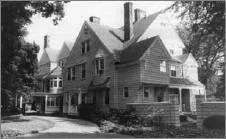
Foundation for Economic Education, Irvington-on-Hudson, New York
It would be hard to overstate the significance of the appearance of FEE. Though its activities were not noticed by a larger national audience, the very existence of this organization gave the scattered classical-liberal forces focus and orientation. It gave them what they had not had since the heyday of nineteenth-century liberalism: a home. FEE provided the material and infrastructure for an enthusiastic return to the ideals of the nineteenth-century laissez-faire liberals. To the key question about the proper functions of government, FEE's Manchesterian answer was that government should be strictly limited to the prevention of “aggressive force” or physical violence.27
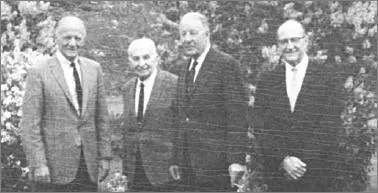
Larry Fertig, Mises, Leonard Read, and Henry Hazlitt
Most importantly, it attracted young people interested in the intellectual case for liberty and ultimately brought Mises in touch with a self-selected group of students, who were much more receptive to the political implications of his ideas than were many of the attendees of his NYU seminar. Several students he first met at FEE conferences later joined the weekly seminar at NYU, where Mises could go into much more detail.
Last but not least, FEE provided some intellectual counterweight to the neo-liberal orthodoxy that was about to emerge from the University of Chicago's economics department. In 1947 and 1948 respectively, Frank Knight and Henry Simons (posthumously) had published collections of articles making their case for a libertarianism that was so watered-down as to be indistinguishable from social democracy28 Other members of the Chicago School were Aaron Director and Milton Friedman. FEE's impact was of course comparatively minor, but without it, the Chicago School would have totally dominated the American free-market scene.
Mises: The Last Knight of Liberalism
Read the whole book online · Book details
Published here by permission of Jörg Guido Hülsmann. This work is still in copyright: free to read and download from this archive, but not licensed for re-publication elsewhere.