
Chapter 92 of 178 · Mises: The Last Knight of Liberalism by Jörg Guido Hülsmann
Liberalismus
With the analysis of interventionist dynamics, Mises had gained a complete picture of all possible forms of the economic organization for human society. The time was ripe for publishing his first book-length synthesis of the results. He sought to make the case for a free society, a case that was not based on aesthetic or ethical considerations, but on the rock-solid foundation of economic science. From there he would spell out the further implications of the case for liberty in fields such as monopoly and anti-trust, the state, colonialism, democracy, foreign trade, and foreign policy. The book would be a synthesis of his post-World War I writings, summarizing the politically relevant results from Nation, State, and Economy as well as from Socialism and his more recent writings on interventionism. Mises packed all these subjects into a book of a mere 175 pages and published it in 1927 under the title Liberalismus.62 It remains one of the most important manifestos of political liberalism. It was not addressed to economists or to the larger community of scholars. It did not contain any new contributions to the social sciences. Rather, it was an exposition and application of the state of the art in economic science—a book for the public, for the citizens of Austria and Germany, and for the citizens of the world.
That “state of the art” was largely shaped by Mises's own efforts. Socialism had been published five years earlier, and his essay “Interventionismus” had only just appeared in print. But Mises presented his views as being held by “the” liberals, and it was not improper for him to do this. He had defined the state of the art. His views on socialism and interventionism were unrefuted and did bring up-to-date the classical-liberal position on both topics. Still, while Mises expounded the views of “the” classical liberals on property, liberty, peace, equality, government, democracy, socialism, free trade, and so on, what the book essentially did was to give a concise presentation of the results of his own work, spelling out for the first time their political implications in detail.
Mises began his argument by stressing two fundamental facts: first, the division of labor is physically more productive than the work of isolated individuals;63 second, all men—save a handful of ascetics—prefer a higher productivity of their labor to a lower one. These two facts represented common ground: neither socialists nor fascists denied them. The question then arises, which way of dividing labor is most productive? All members of society can agree that this is the decisive question; where they disagree is on which answer is correct. The liberals want to entrust all aspects of the division of labor to the decisions of individuals who work out competing schemes of cooperation based on mutual consent and recognition of private property. The socialists want to expropriate all private property—or at least abolish all private property in the means of production; for them, the division of labor is to be organized by a central plan, which regulates all instances of cooperation between individuals. The social democrats and other partisans of a “Third Way” champion partial expropriations to curb what they believe are the excesses of capitalism.
In light of Mises's insights concerning socialism and interventionism there can be no doubt as to which is the correct answer. Socialism cannot possibly be as productive as capitalism because it cannot have recourse to monetary calculation and therefore lacks the wherewithal to compare physically heterogeneous production alternatives. Interventionism is intellectually incoherent. It does not achieve the self-proclaimed aims of its champions, which is why even Marx loathed it.64 And it cannot be the foundation of a permanent economic order because it has the tendency to move toward socialism. The unbiased observer is therefore forced to admit that capitalism is the only rational, productive economic order since all other alternatives squander resources and destroy wealth. One might like capitalism or hate it; one might deem it ethically justified or offensive; the fact is that there is nothing else that can possibly take its place. Economizing and a large-scale division of labor are possible only in a free market based on private property. The free market, then, is necessarily more productive and happiness-enhancing (insofar as happiness is at all enhanced by material things) than any other social system.
Hence, the primary goal of liberalism is to ensure a productive division of labor, and the fundamental postulate of its political program is the protection of private property as the means to achieving that goal. All other postulates are secondary. For example, the postulate of personal freedom for all members of society (rejection of slavery) relies on the fact that free men work better than slaves. It is therefore not only in the interest of all other citizens but also in the interest of the slave masters, that the chains of slaves be broken. Similarly, the postulate of legal equality of all men is not based on some notion of natural law according to which all men are born equal. To Mises it was obvious that men are born unequal. Still he held that they should enjoy legal equality. Why? Because if they were not treated equally before the law—if some have a privileged legal position compared to others—then group conflicts are artificially brought about, disturbing the peace that is the very basis for the division of labor.65 The same consideration applies in the case of democracy. Mises restated the utilitarian justification of democracy that he first presented in Socialism. In a letter to Anton Erkelenz, the editor of the influential left-liberal (Naumannian) journal Die Hilfe, Mises elaborated on the significance of his approach in the context of the 1920s:
You claim with some regret that I am “not a democrat as a matter of principle,” but only for economic reasons. It is certain that political principles are to be desired or repudiated only from the point of view of their social consequences. Can one refute those opposed to democracy if one cannot offer any argument in favor of democracy other than one claiming that every individual should have the same rights? Does this not leave one defenseless, then, against the objection that human beings are extraordinarily varied and that it is illicit to grant equal rights to the good and the evil? That young academics have turned against democracy is, above all, because the common way of defending democratic principles is thoroughly flawed.66
He brought the same considerations to bear on the case of fascism, which he emphasized was a movement that arose in reaction to the ruthlessness of the Bolshevist parties organized in the Third International. To the extent that the fascists used naked force to combat the violence of the Bolshevists, Mises said, it was unobjectionable. There was no other remedy against force but force itself. But the danger of the fascists was their blind faith in the omnipotence of this means. Ultimately, peace and social cooperation can only be founded on victories in the realm of ideas.67 “Fascism was an emergency makeshift. To view it as something more would be a fatal error.”68 Unfortunately, that fatal error was not avoided, and the lesson was not learned. Fascism was not wrong for condoning the use of force (all social systems do), but for idolizing its use.
For Mises, the important lesson was that fascism's error was not in its collectivist roots, but in its rejection of the social function of private property. Many modern libertarians still think that capitalism is an outgrowth and reflection of individualism, whereas socialism, both left and right, results from collectivism. Whatever the merits of this view, Mises did not subscribe to it. He stressed that the question of how best to organize the division of labor has nothing to do with the question of whether society should serve the needs of the individual or if the individual should serve society.69 Neither is there a collectivist science as opposed to individualist sciences. There are only facts and the one true science to deal with them. And to Mises the facts were clear: there is only one way to make society work at all, namely, the mutual respect for private property rights. It is therefore beside the point whether society in some sense precedes the individual or the other way round; it is also irrelevant to ask who should be served by social cooperation since there is only one type of social interaction that merits the name “cooperation” at all.
His book did not have the desired effect. Many years later, Mises wrote in private correspondence that in “Germany and Austria, it had no success, and neither could a Swedish translation stop the drive to the planned economy.”70 A few years later, after Hitler came to power, the authorities ordered the publisher to destroy all remaining copies.71
Mises lecturing at his NYU seminar in 1960. Henry Hazlitt was a regular participant.
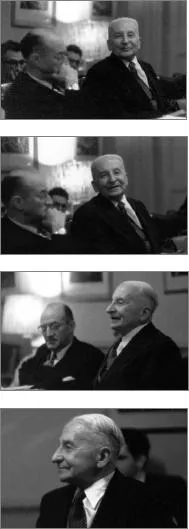
The Mises Dinner Circle in New York in 1959 top, Mises, Hayek, and Percy Greaves; middle, Mises, Bettina Bien Greaves, and Hazlitt; bottom, Mises and Hayek

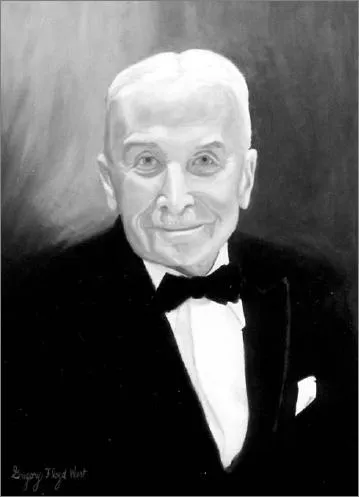
Portrait of Mises by Gregory Floyd West
Mises: The Last Knight of Liberalism
Read the whole book online · Book details
Published here by permission of Jörg Guido Hülsmann. This work is still in copyright: free to read and download from this archive, but not licensed for re-publication elsewhere.