
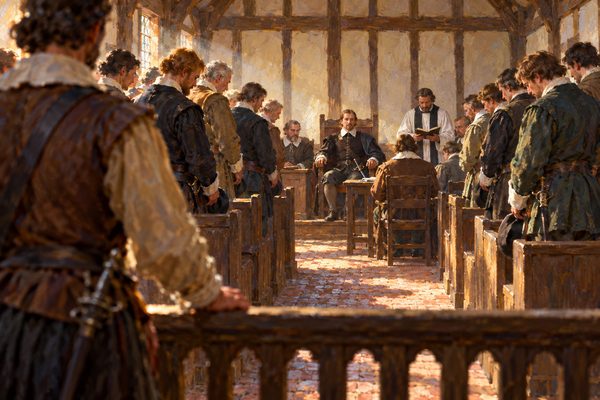
Who gets to govern?
Compare elected representation, religious authority, imperial resistance, independence, and constitutional procedure through five selected scenes.
A companion to Murray N. Rothbard’s book
A Companion in Paintings
Explore authority, belief, and resistance in colonial America, the Revolution, and the early republic, 1619–1788.
For high school, introductory college, and interested adults.
Begin: Who gets to govern?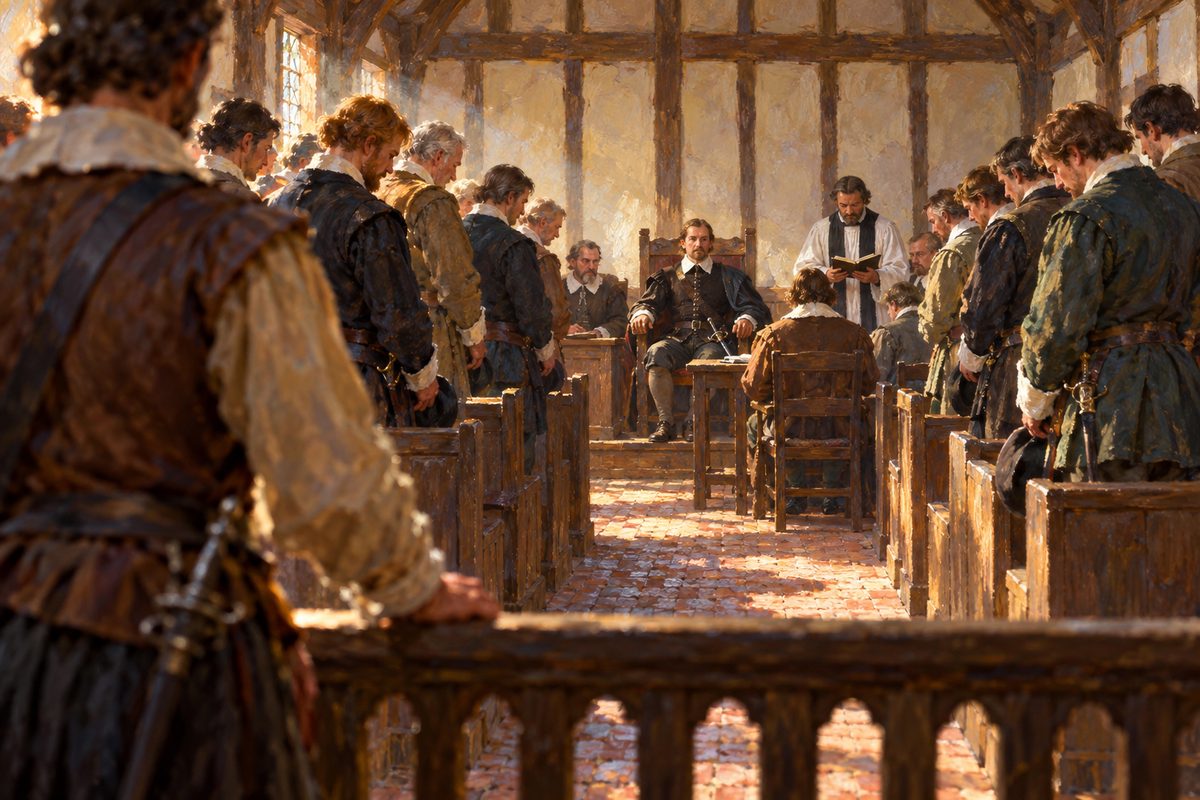
Who may exercise power, and how can people challenge it? Follow that question through local government, religious dissent, independence, and constitutional debate.
Rothbard’s libertarian history emphasizes individual liberty and resistance to coercive government. These short explorations invite you to examine his arguments through paintings, historical context, and discussion.
Compare elected representation, religious authority, imperial resistance, independence, and constitutional procedure through five selected scenes.

Examine religious dissent and printing through four conflicts over who controls public expression.
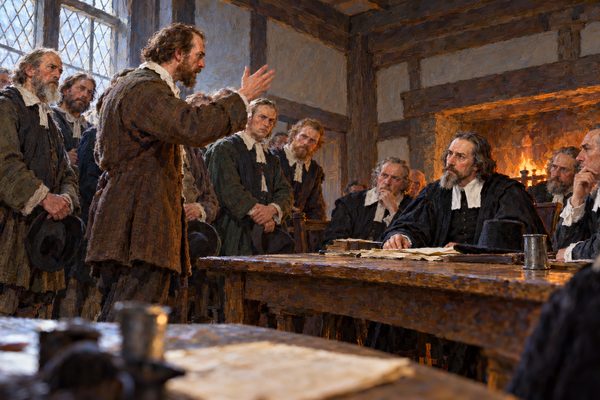
Compare a tax refusal, a town’s administrative resistance, and an army mutiny by examining grievances, methods, and consequences.
Each scene links to its source volume and chapter. Use Read with the book to follow Rothbard’s chapter order, or open the original text and downloads.
Use one exploration for independent reading, homeschool discussion, or an introductory seminar. The Teaching guide includes preparation time, content notes, and student and instructor print packets.
This AI-assisted adaptation draws on Conceived in Liberty and additional historical sources. Each scene cites its sources and labels whether the narration combines them or presents Rothbard’s account separately from added context.
The paintings reconstruct historical events, with poses, expressions, lighting, and composition chosen by the artist. Scene pages explain known uncertainties.
Reuse paintings and companion additions under CC BY 4.0 with credit to freecapitalists.org. Book volumes and external sources have their own terms. Reuse details · Historical notes about the source book