
America’s first elected voice
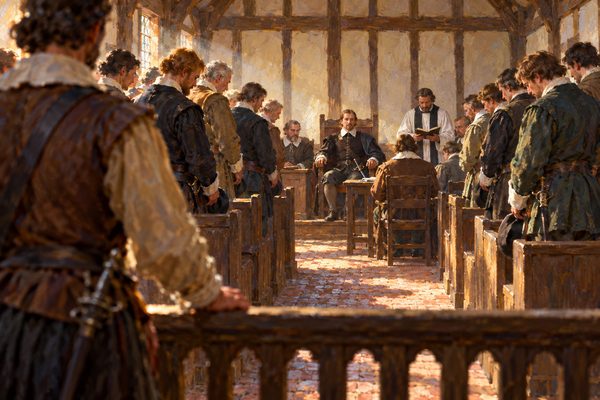
The first Virginia General Assembly
Elected burgesses join Virginia’s governor and council while company power remains.
Read chapter 3Browse selected scenes across all volumes. Chapter order follows the book; timeline order follows the event dates. This collection is not an exhaustive chronology.
140 scenes
No scenes match. Clear the search or reset the filters.
The first Virginia General Assembly
Elected burgesses join Virginia’s governor and council while company power remains.
Read chapter 3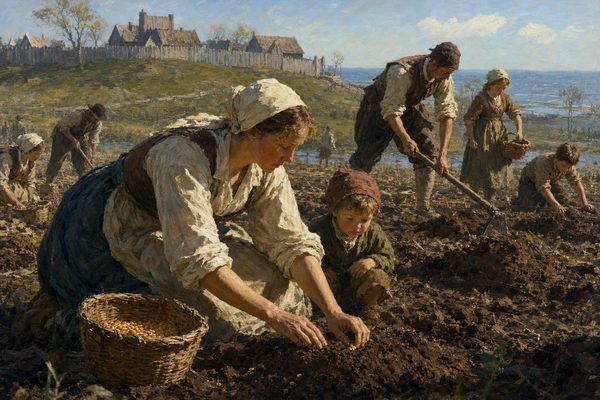
The Founding of Plymouth Colony
By 1623 Plymouth had spent its first years farming a common field for the London company that financed the voyage, and it had spent them hungry.
Read chapter 18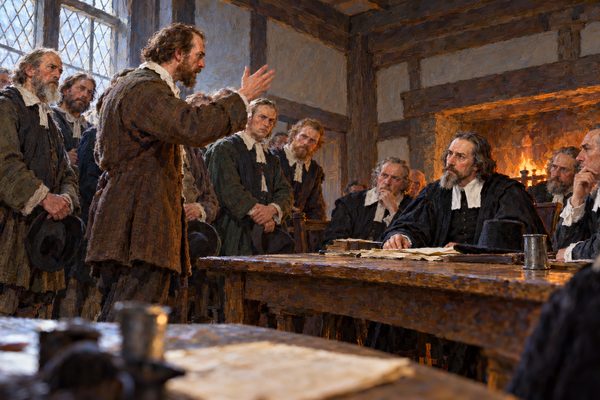
Watertown challenges a tax levy
Watertown challenges a levy imposed without its own representatives deciding.
Read chapter 19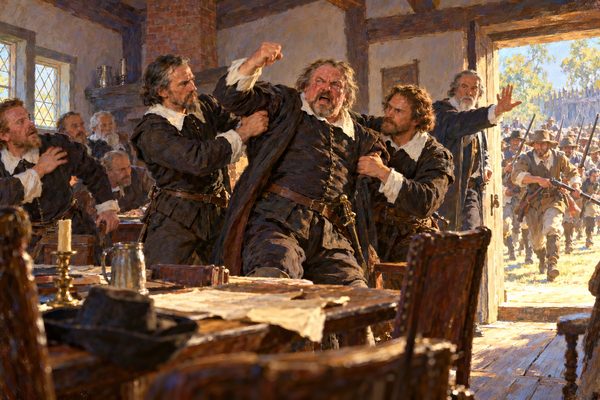
The Royal Government of Virginia
By 1635 Virginia’s royal governor, Sir John Harvey, had taxed tobacco exports, charged fees on immigrants, jailed his critics and taken Lord Baltimore’s side against Virginia’s own William Claiborne.
Read chapter 8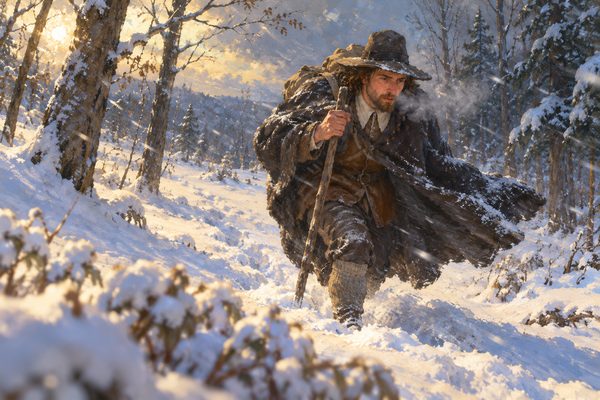
Roger Williams flees Massachusetts Bay
A dispute over religious authority drives Roger Williams out of Massachusetts Bay.
Read chapter 21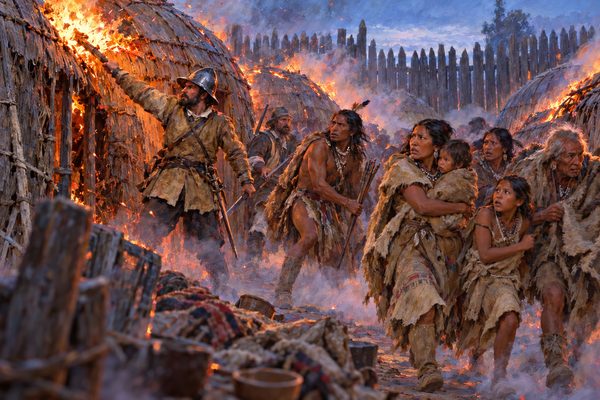
Joint Action in New England: The Pequot War
Rothbard’s opening charge: New England’s “first exercise in united action came in a joint slaughter of Indians” (p.
Read chapter 27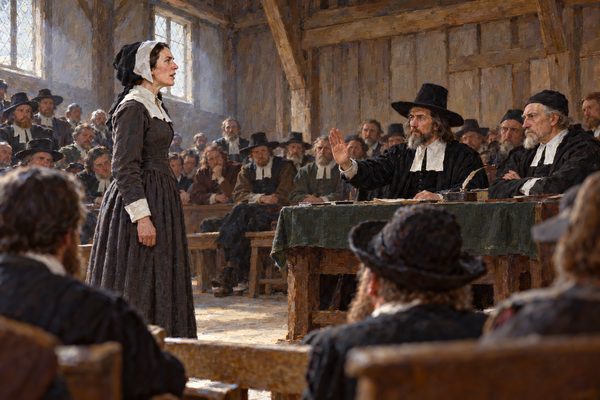
Anne Hutchinson before the General Court
Anne Hutchinson confronts a court that combines lawmaking and judicial power.
Read chapter 22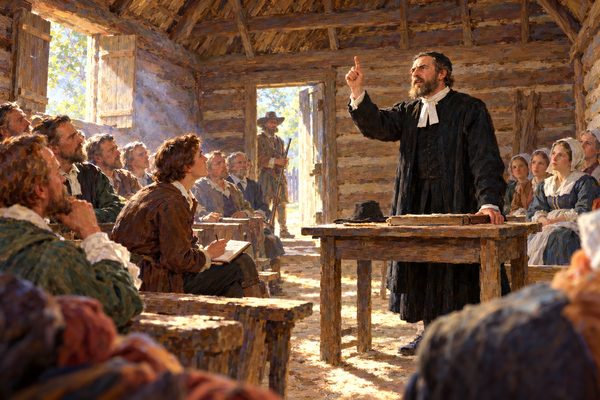
The Planting of Connecticut
On Thursday 31 May 1638 Thomas Hooker, minister of the river town of Hartford, gave his midweek lecture on a verse from Deuteronomy about choosing wise men to be rulers.
Read chapter 25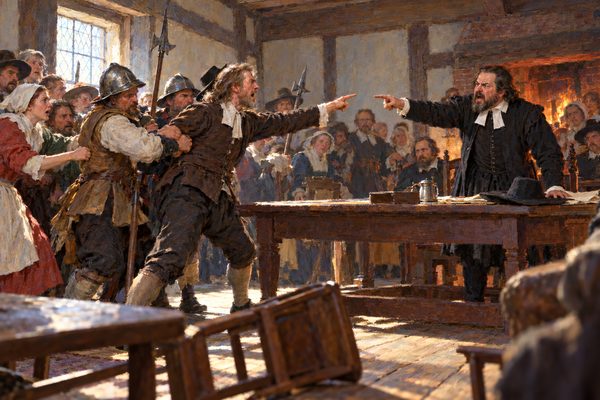
The Further Settlement of Rhode Island: The Odyssey of Samuell Gorton
Samuell Gorton had already been driven out of Plymouth for standing up for a servant against the magistrates, and by 1640 he was at Portsmouth on Aquidneck.
Read chapter 23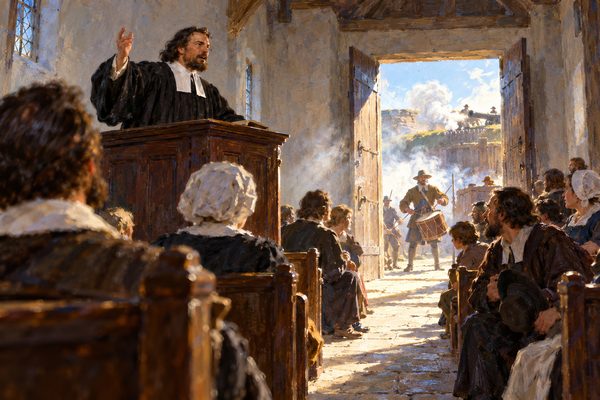
Governors and Government
Domine Everardus Bogardus, the Dutch Reformed minister of New Amsterdam, had denounced Director Willem Kieft from the pulpit as a plunderer whose whole art of government was to dismiss, to banish and to ship men off to Holland.
Read chapter 39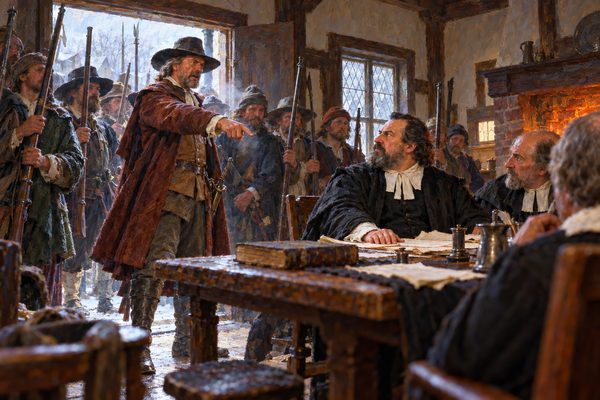
Rhode Island in the 1650s: Roger Williams’ Shift from Liberty
In 1651 William Coddington came back from England with a commission from the Council of State that made him governor of Aquidneck for life.
Read chapter 24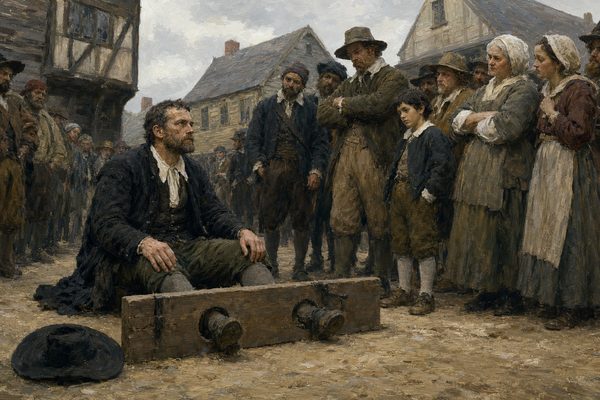
The Puritans Purify: Theocracy in Massachusetts
Rothbard describes the Puritan Sunday in Massachusetts: work, travel and levity were outlawed, and “kissing one’s wife in public on a Sunday was also outlawed” (CiL, p.
Read chapter 20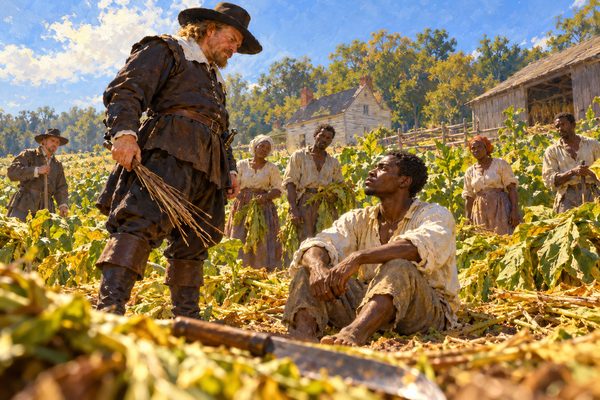
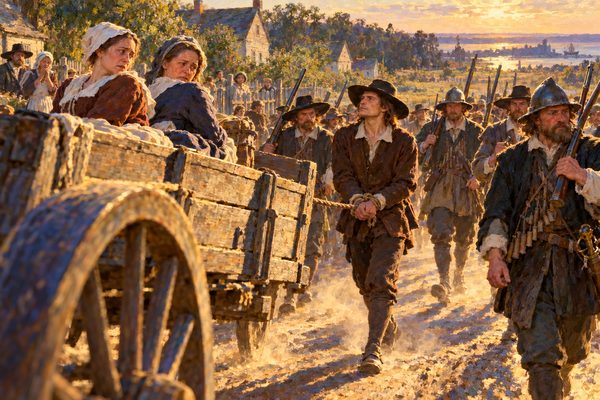
New Netherland Persecutes the Quakers
In August 1657 Robert Hodgson, a young English Quaker, landed at New Amsterdam and went out among the English towns of Long Island to preach.
Read chapter 41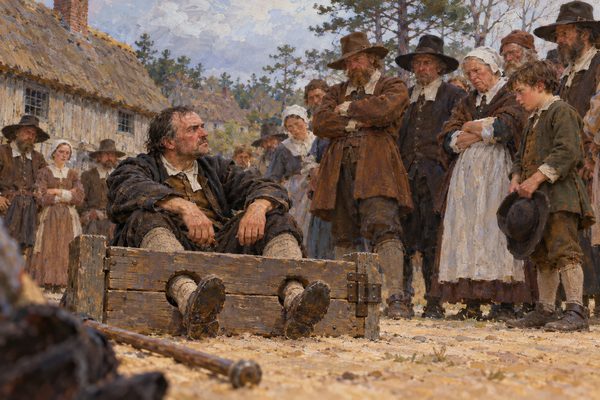
The Decline and the Rigors of Plymouth
In June 1658 Plymouth Colony made George Barlow constable of Sandwich and special marshal for the Cape towns, and paid him on commission for the heretics he found.
Read chapter 36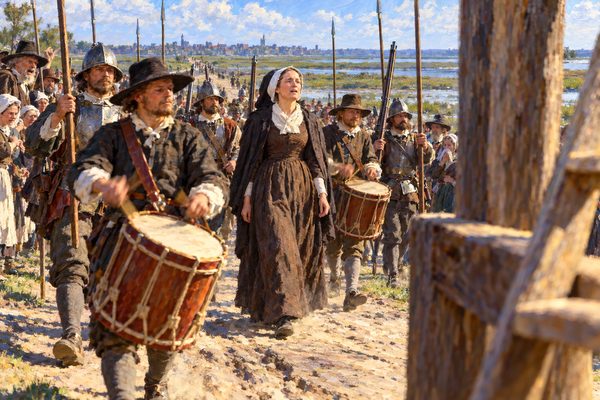
Suppressing Heresy: Massachusetts Persecutes the Quakers
Mary Dyer had been banished from Massachusetts on pain of death for being a Quaker.
Read chapter 29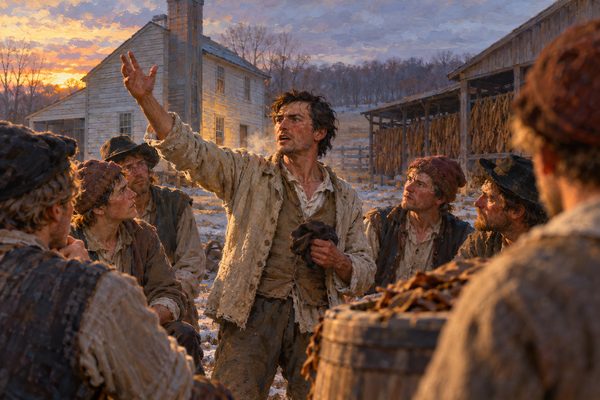
The Social Structure of Virginia: Bondservants and Slaves
In the winter of 1660-61 the servants on Major James Goodwin’s plantation in York County, Virginia, were fed corn and water and reckoned they were owed meat three times a week.
Read chapter 6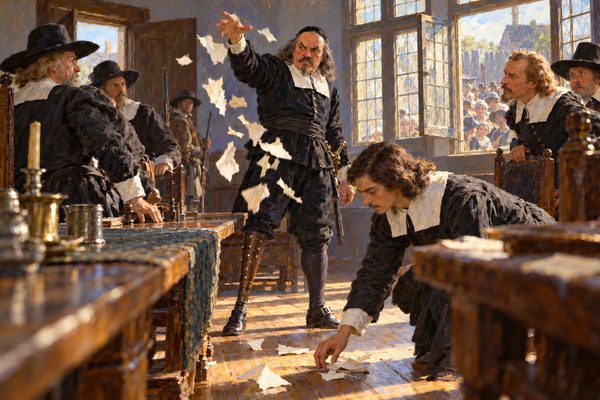
The Fall and Breakup of New Netherland
At the end of August 1664 an English fleet carrying a thousand men anchored off New Amsterdam, against Stuyvesant’s 150 soldiers and 250 citizens under arms, and Colonel Richard Nicolls demanded the town.
Read chapter 42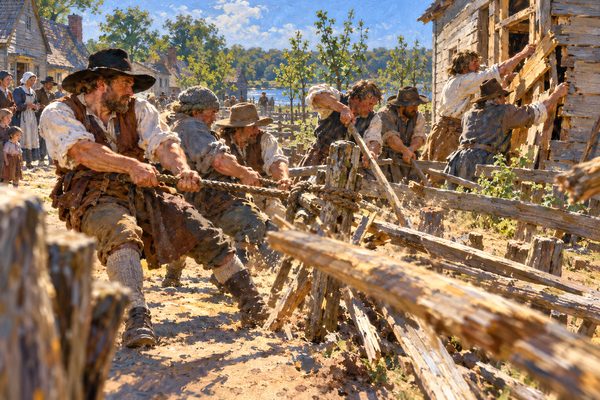
The Northern Colonies, 1666-1675
Elizabethtown was settled by New Englanders on a grant from Governor Nicolls, and its people ran their affairs through a town meeting, as they had at home.
Read chapter 43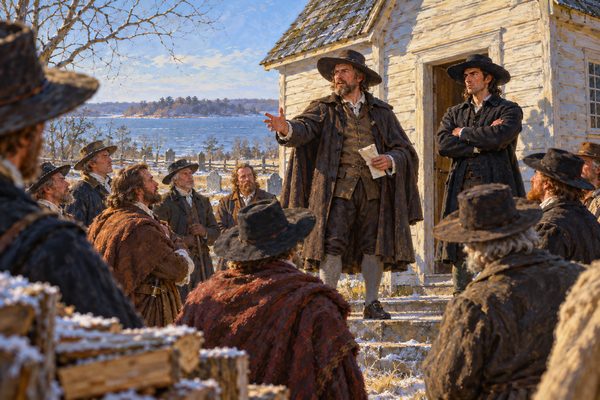
British Mercantilism over Virginia
By 1673 Governor Berkeley’s clique ran Virginia’s county courts.
Read chapter 9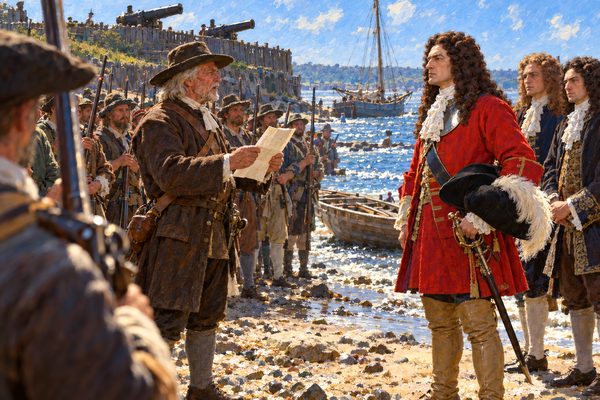
King Philip’s War
King Philip’s War had just broken out in the summer of 1675 when Sir Edmund Andros, the Duke of York’s governor at New York, sailed for the Connecticut River with two small vessels to claim everything west of it for the duke.
Read chapter 46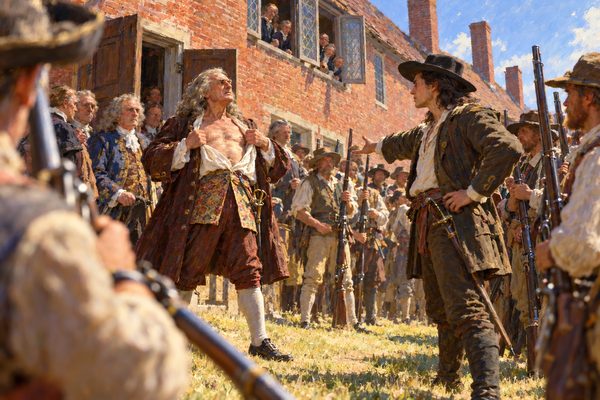
Bacon’s Rebellion
On 23 June 1676 Nathaniel Bacon, twenty-nine years old, marched about five hundred armed volunteers into Jamestown while the Assembly was sitting and drew them up before the statehouse door.
Read chapter 11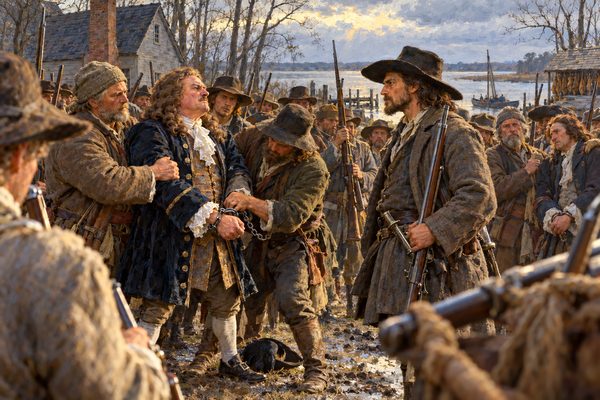
The Aftermath of Bacon’s Rebellion in the Other Southern Colonies
Thomas Miller came to Albemarle in 1677 as the proprietors’ collector and acting governor and set about enforcing the tobacco tax the settlers hated, raising quitrents and putting prices on the heads of the province’s leaders.
Read chapter 14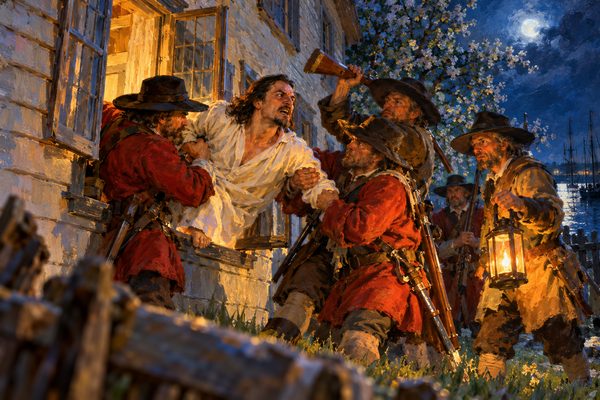
Turmoil in East New Jersey, 1678-1686
In the spring of 1680 Sir Edmund Andros, governor of New York for the Duke of York, claimed East Jersey and ordered Governor Philip Carteret to stop governing it.
Read chapter 53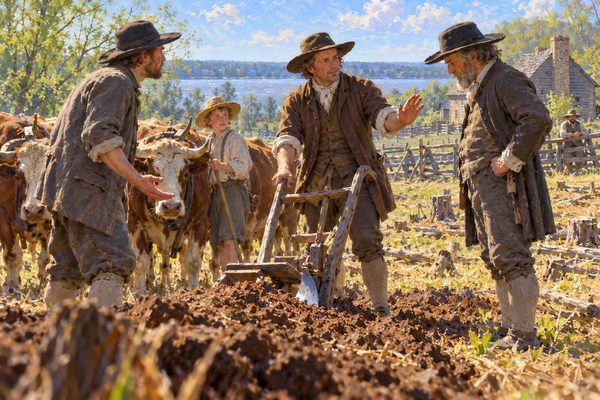
The Development of West New Jersey
Thomas Olive came to West Jersey from Wellingborough in England as one of the Quaker proprietors, sat as a justice of the provincial court at Burlington, and later served as Speaker of the Assembly and deputy governor.
Read chapter 54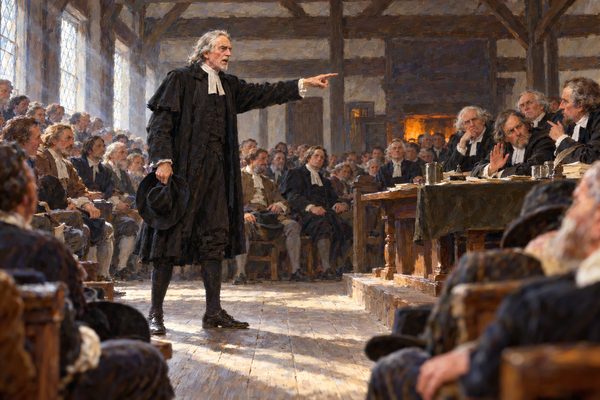
Edward Randolph versus Massachusetts, 1680-1684
In February 1682 the General Court of Massachusetts heard a letter from Charles II read aloud, carried over by Edward Randolph, the customs collector.
Read chapter 49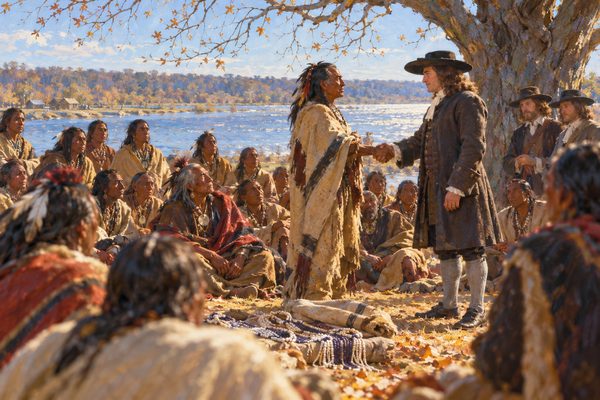
“The Holy Experiment”: The Founding of Pennsylvania, 1681-1690
William Penn landed in his new province in late October 1682, and Rothbard writes that in November he concluded the first of several treaties of peace and friendship with the Delaware Indians at Shackamaxon, near Philadelphia.
Read chapter 55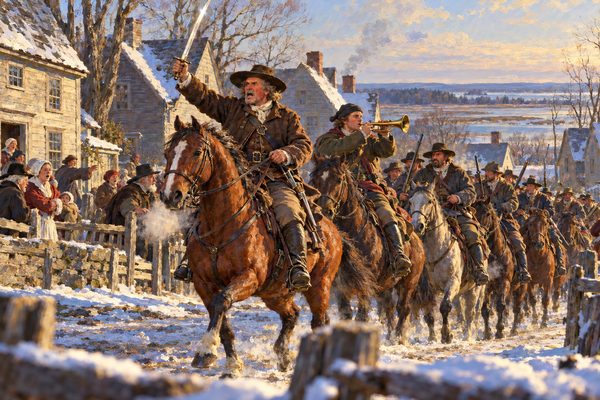
The Crown Takes Over New Hampshire, 1680-1685
Edward Cranfield arrived in October 1682 as New Hampshire’s first royal governor and set about ruling by decree.
Read chapter 48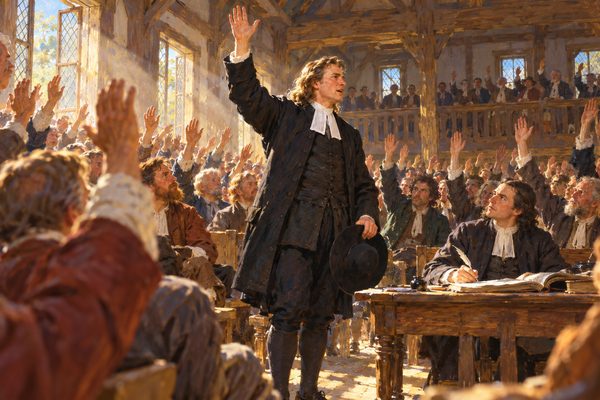
Ipswich refuses a tax commissioner
A town withholds the commissioner needed to administer a disputed tax.
Read chapter 56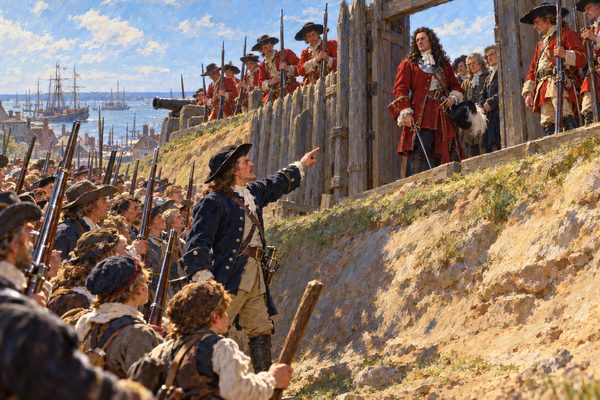
The Glorious Revolution in the Northern Colonies, 1689
On Thursday 18 April 1689 Boston rose against Governor Sir Edmund Andros and the Dominion of New England.
Read chapter 57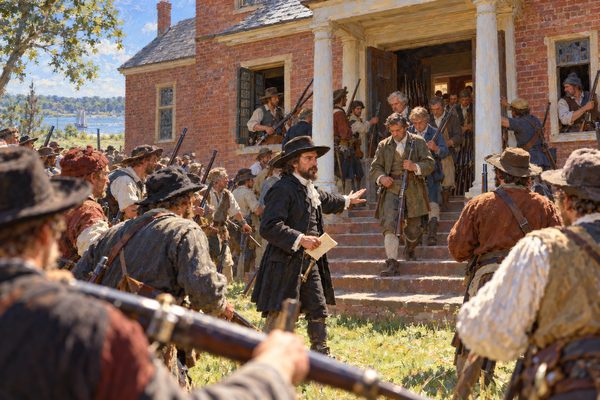
The Glorious Revolution and its Aftermath
In the summer of 1689 Maryland learned that William and Mary had taken the English throne, and rumors spread that the Catholic proprietor’s deputy governors were arming the State House at St.
Read chapter 15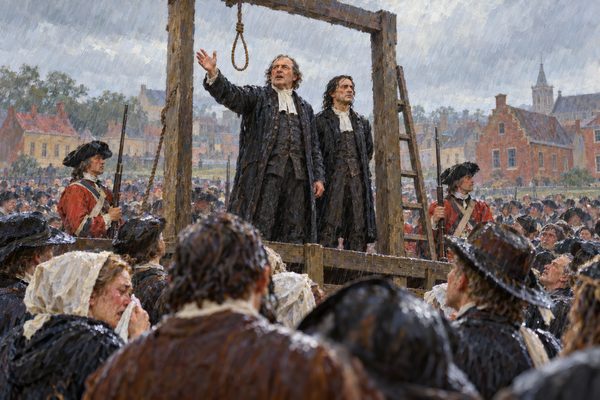
The Glorious Revolution in the Northern Colonies, 1690-1692
Rothbard tells Jacob Leisler’s story without flattery.
Read chapter 58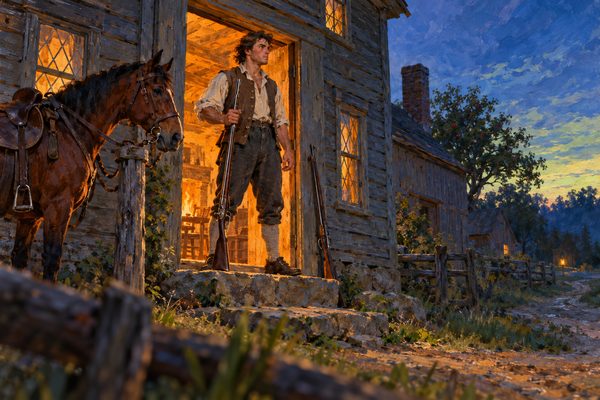
Aftermath of the 1690s: The Salem Witch Hunt and Stoughton’s Rise to Power
The Salem witch-hunt of 1692 was not a mob.
Read chapter 59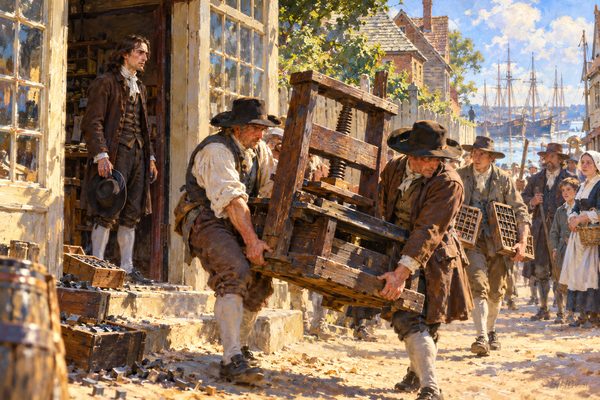
William Bradford’s printing press is seized
A religious dispute becomes a struggle over the tools of public expression.
Read chapter 64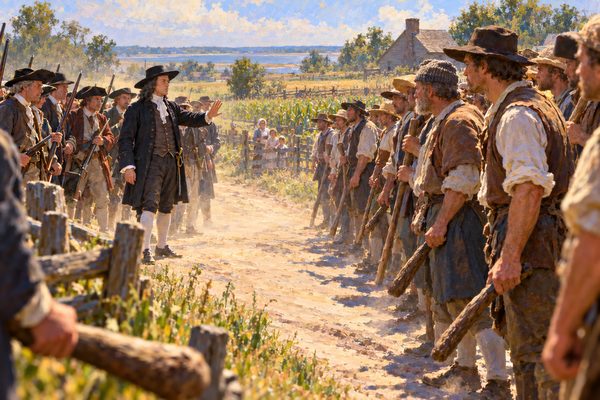
The Unification of the Jerseys
East Jersey’s towns had refused Governor Jeremiah Basse’s sharp new taxes in 1699, and by the summer of 1700 they were shutting the proprietors’ courts, jostling their judges and freeing their prisoners.
Read chapter 63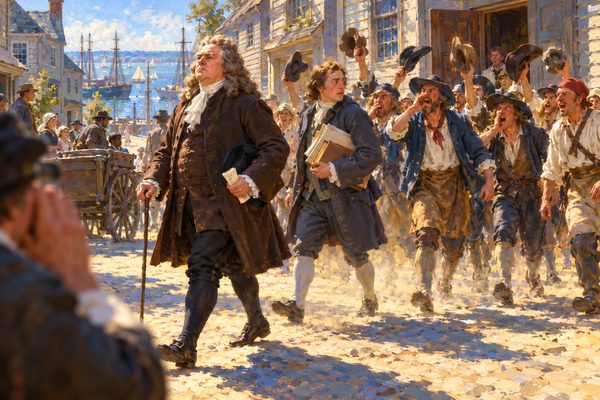
Rhode Island and Connecticut after the Glorious Revolution
In June 1705 a Rhode Island privateer, Captain John Halsey’s brigantine Charles, brought a prize into Newport under a commission from Governor Samuel Cranston.
Read chapter 62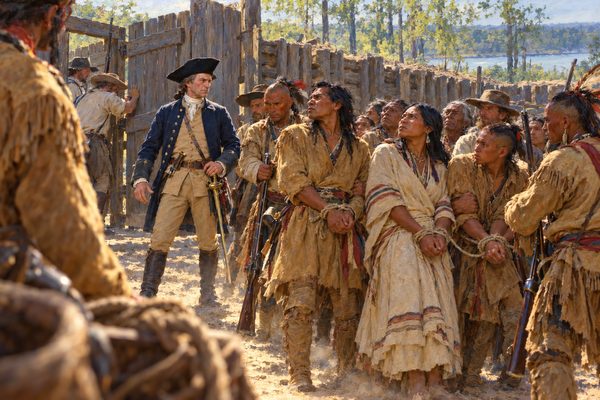
Indian War in North Carolina
In January 1712 Colonel John Barnwell marched from South Carolina to help North Carolina against the Tuscarora, leading about thirty white officers and some five hundred Indian allies, most of them Yamasee.
Read chapter 19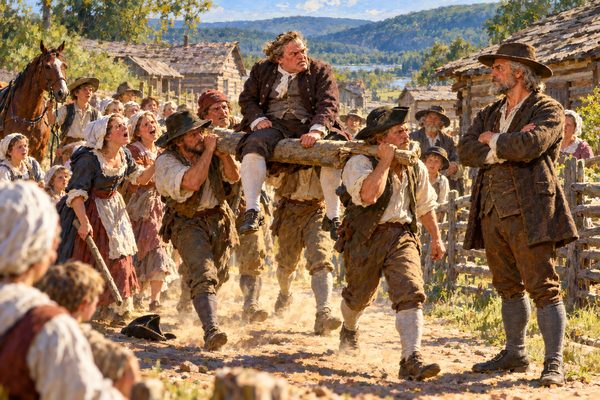
New York Land Monopoly
In 1713 the Palatine refugees, who had already been worked like servants by the Crown and by Robert Livingston, settled on the Schoharie and bought their land from the Mohawks.
Read chapter 7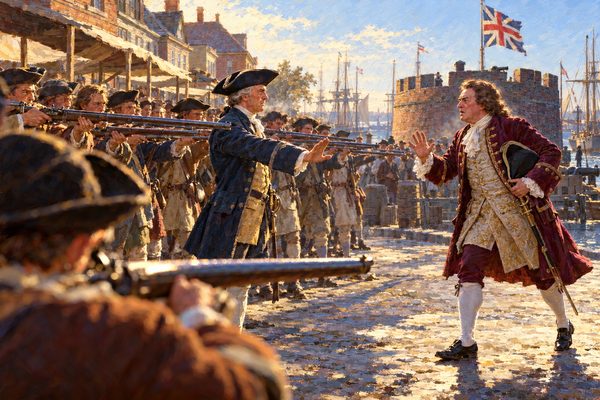
Proprietary Rule in South Carolina
In November 1719 South Carolina’s militia was under arms against a feared Spanish attack, and its men used the muster to do something else.
Read chapter 23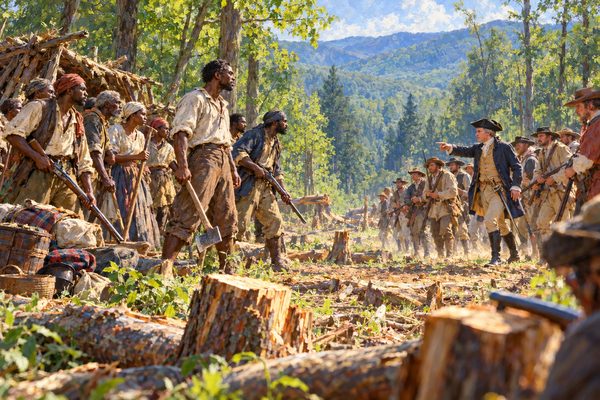
Slavery in Virginia
In 1729 a band of slaves left a new plantation on the James River and went west into the mountains.
Read chapter 18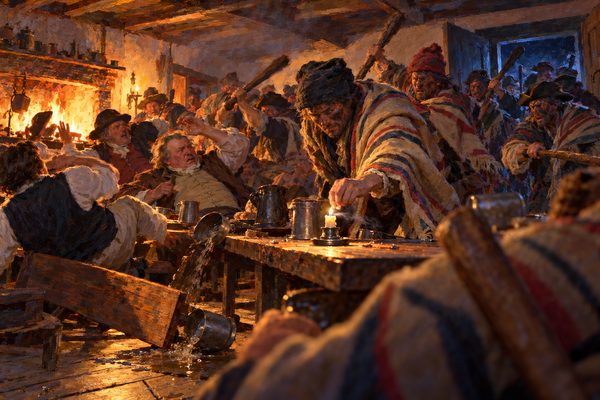
Mercantilist Restrictions
By 1734 New Hampshire’s loggers had been fighting the Crown’s claim to the white pines for a generation.
Read chapter 35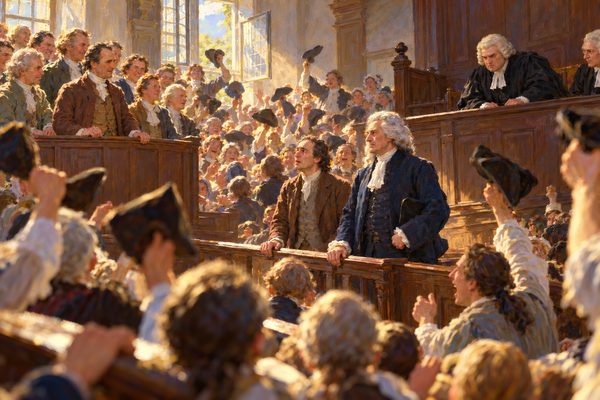
John Peter Zenger is acquitted
A jury acquits a printer prosecuted for criticism of New York’s governor.
Read chapter 27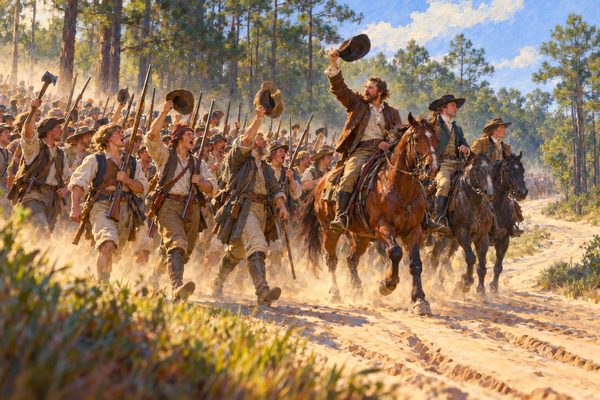
Royal Government in North Carolina
Gabriel Johnston, royal governor of North Carolina, wanted the quitrents paid in sterling or in paper money valued by his Council, and he wanted the arrears as well.
Read chapter 21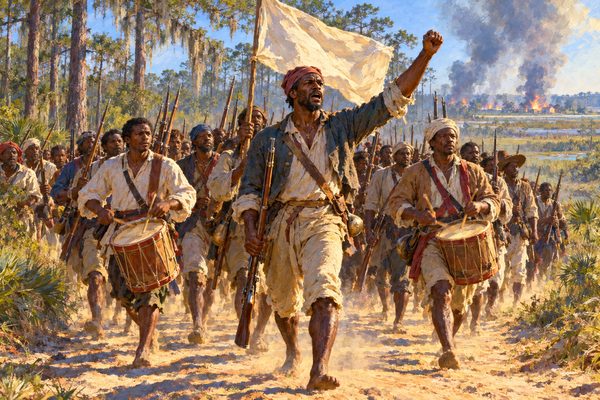
Slavery in South Carolina
In Rothbard’s telling, “the especial brutality toward and the high concentration of slaves made South Carolina the focal point for slave rebellion” (p.
Read chapter 22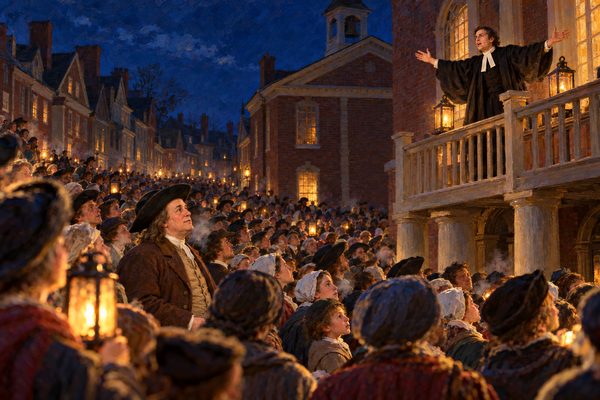
The Great Awakening
George Whitefield landed in Philadelphia on a Friday night in early November 1739 and began preaching in the church.
Read chapter 29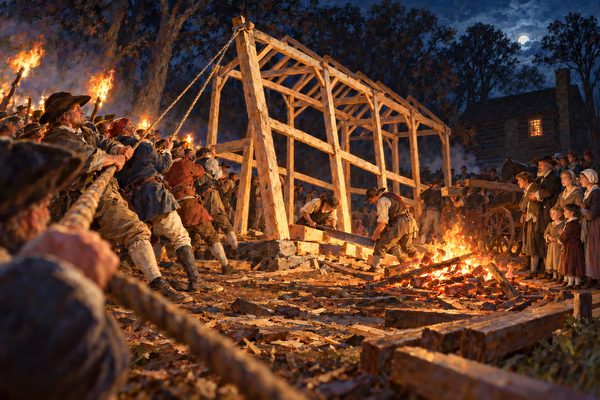
The Ulster Scots
In 1718 several hundred Ulster Presbyterians landed at Boston and met a cold welcome.
Read chapter 10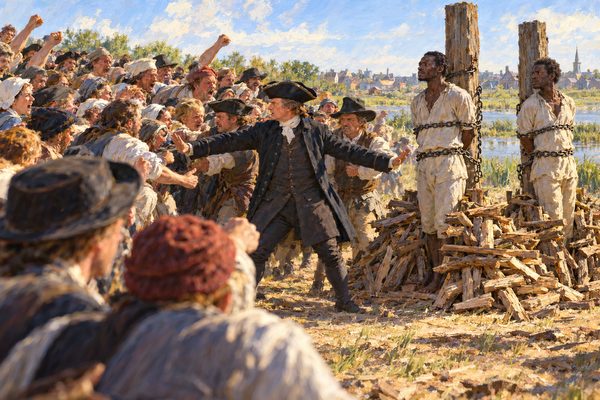
Slavery in New York
The winter of 1740-41 was hard in New York.
Read chapter 8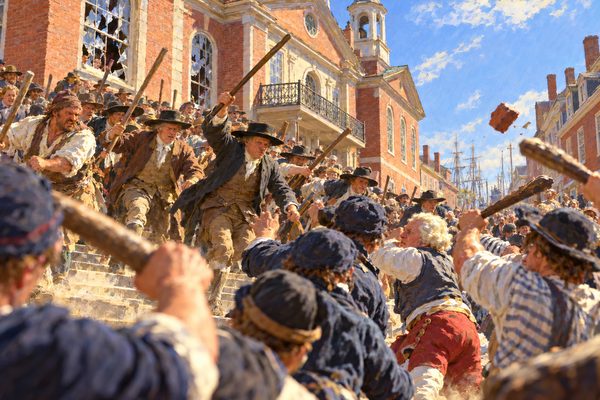
Pennsylvania: Quakers and Indians
Philadelphia voted once a year, on 1 October, at the Court House in the middle of Market Street, and in 1742 rumor ran ahead of the day: the Quakers would bring unnaturalized Germans in from the country, and the governor’s friends would bring sailors.
Read chapter 12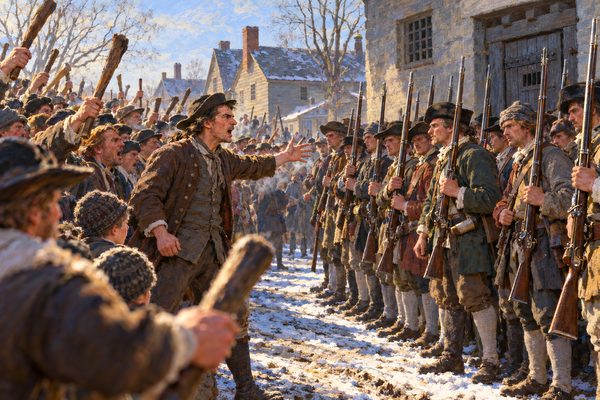
Land Conflicts in New Jersey
New Jersey’s land war began because dozens of owners claimed the same ground.
Read chapter 9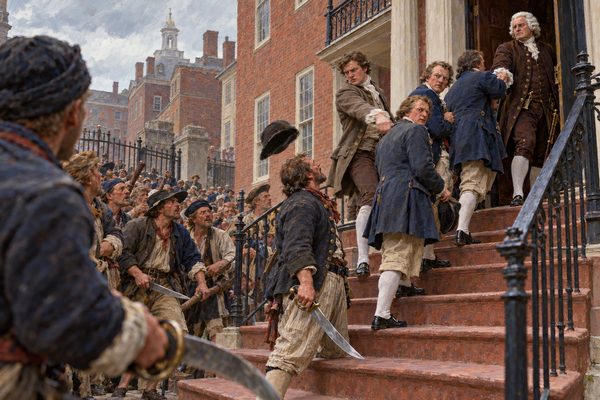
King George’s War
On the morning of 17 November 1747 the Royal Navy’s press gangs had taken almost fifty Boston laborers and dragged them to Commodore Knowles’s ships, and the town answered at once.
Read chapter 36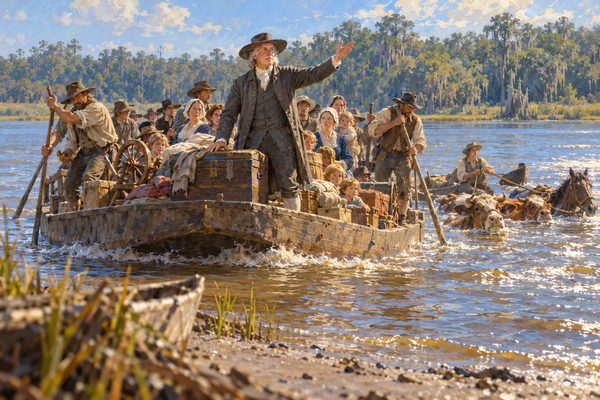
Georgia: The “Humanitarian” Colony
Georgia’s first royal Assembly met in early 1755 over a fight Edmund Gray was losing.
Read chapter 25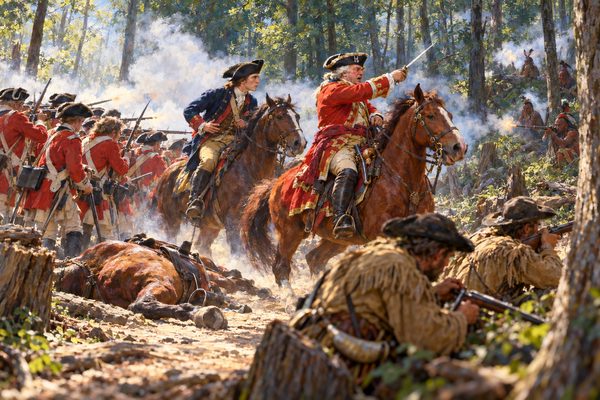
Early Phases of the French and Indian War
In the summer of 1755 General Edward Braddock led some twenty-five hundred men, in Rothbard’s count, out of Virginia toward Fort Duquesne, a road of his own cutting through the Allegheny forest.
Read chapter 37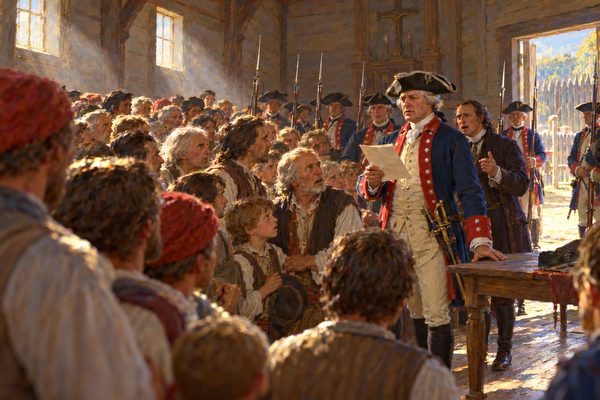
The Persecution of the Acadians
On 2 September 1755 Lieutenant-Colonel John Winslow of Massachusetts posted a summons at Grand-Pré: every man and boy of the parish was to come to the church on Friday at three o’clock to hear what His Majesty had ordered.
Read chapter 38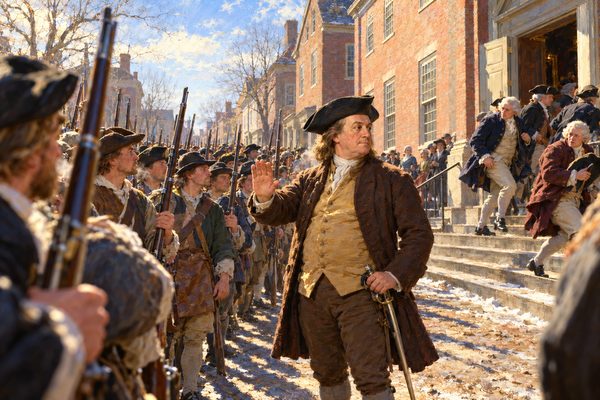
The Emergence of Benjamin Franklin
Franklin drafted the militia act of November 1755 himself, and when Philadelphia’s men elected him their colonel, Governor Robert Hunter Morris signed his commission on 24 February 1756, reluctant, Leonard Labaree wrote, but unable to refuse a man so popular.
Read chapter 13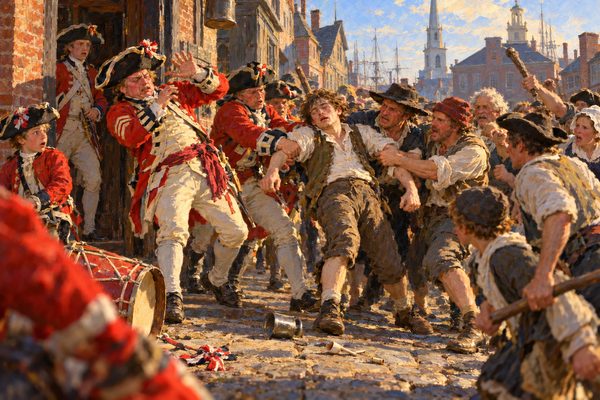
The American Colonies and the War
In the spring of 1758 Massachusetts was asked for another army.
Read chapter 40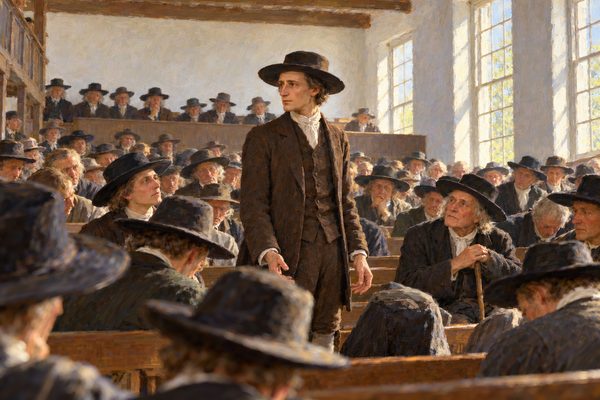
The Quakers and the Abolition of Slavery
John Woolman had come to the yearly meeting of 1758 with a heavy heart.
Read chapter 31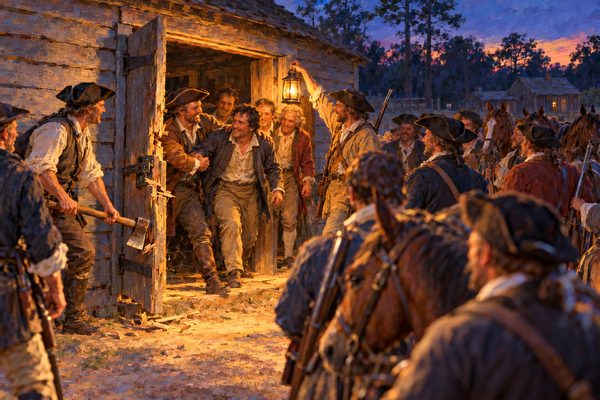
The North Carolina Proprietary
Lord Carteret, now the Earl of Granville, held a huge block of northern North Carolina, more than half the province, and his agents charged excessive fees, demanded quitrents in coin and issued fraudulent deeds.
Read chapter 20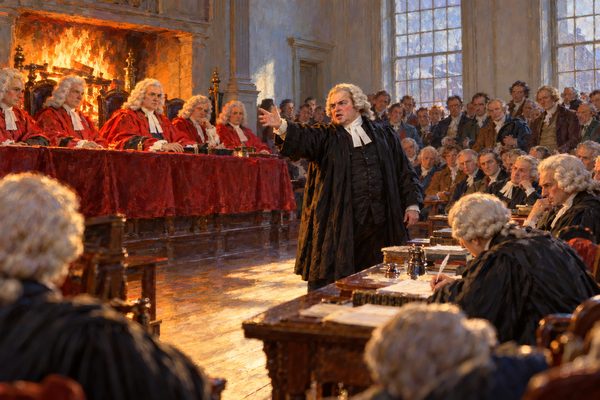
Writs of Assistance in Massachusetts
On 24 February 1761 the Massachusetts Superior Court sat in the Council Chamber of the Town House to decide whether customs officers could keep their general writs of assistance.
Read chapter 5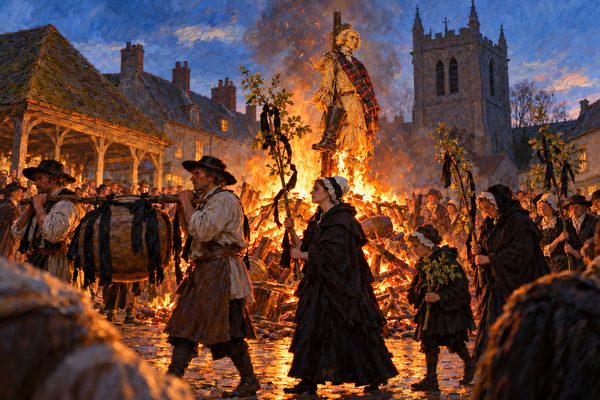
The British Army and the Grand Design
In March 1763 Lord Bute’s government laid a tax on cider, and the tax collectors’ right to enter private homes made it the most hated in the land.
Read chapter 4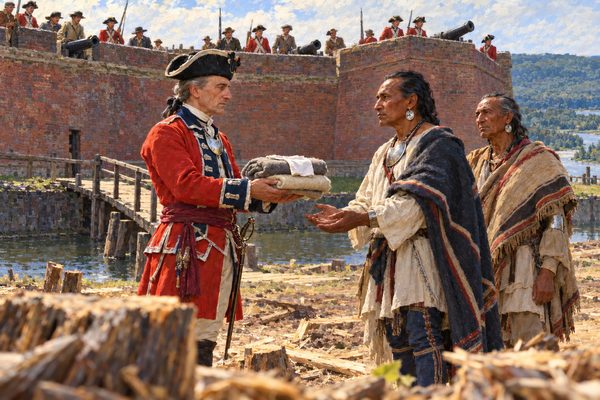
The Ohio Lands: Pontiac’s Rebellion
By late June 1763 Pontiac’s war had reached the forks of the Ohio.
Read chapter 2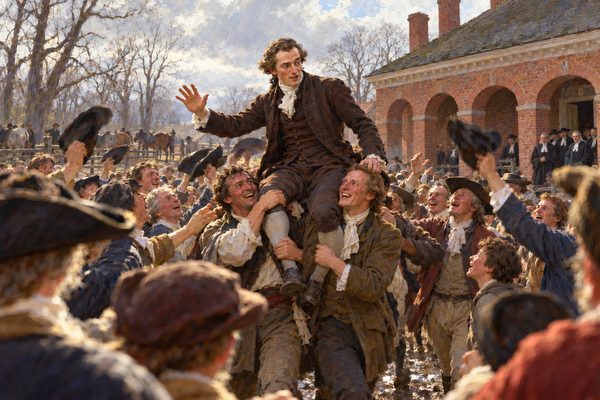
The Parsons’ Cause
Virginia paid its Anglican parsons in tobacco, and in 1758 a drought sent the price soaring.
Read chapter 17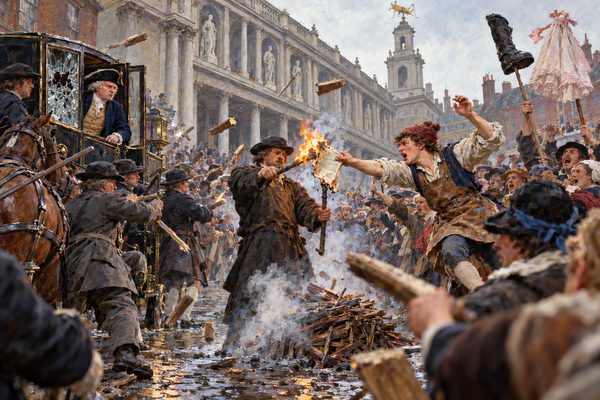
Wilkes and Liberty, 1763-1764
John Wilkes had printed his attack on the king’s speech in issue number 45 of his newspaper, the North Briton, and the government answered with a general warrant and the Tower.
Read chapter 18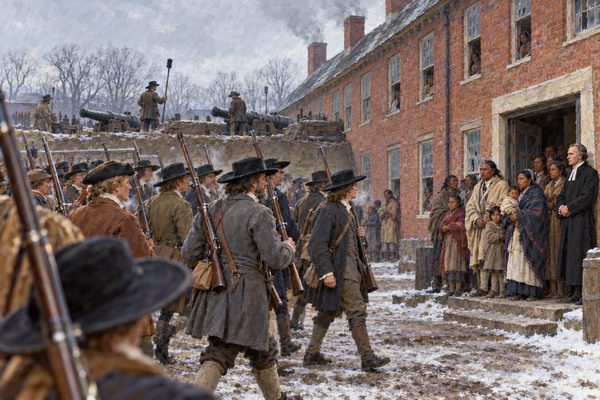
The Paxton Boys
The Moravian Indians of Nain and Wechquetank came to Philadelphia in November 1763, sent down by the governor because the people of Northampton County were determined to cut them all off.
Read chapter 14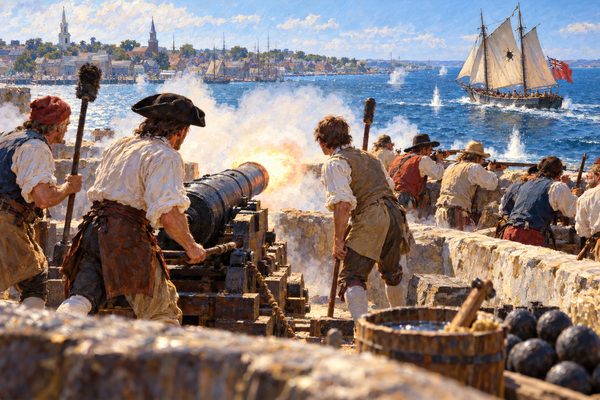
The Newport Case
Newport spent the summer of 1764 at odds with the Royal Navy.
Read chapter 15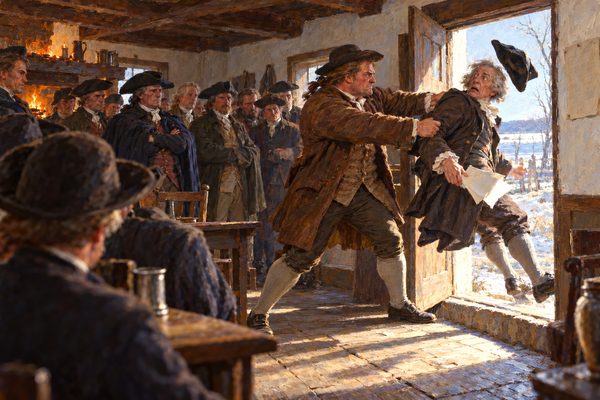
Enforcement Troubles
In 1764 Parliament raised the stakes on the old molasses trade.
Read chapter 14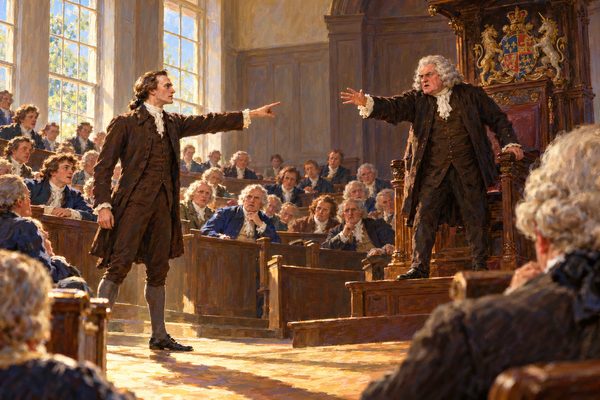
Patrick Henry Intervenes
By the third week of May 1765 only about a third of Virginia’s burgesses were still in Williamsburg.
Read chapter 21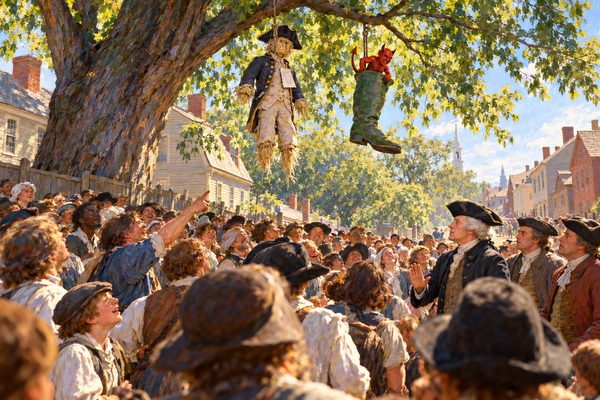
Sam Adams Rallies Boston
At dawn on 14 August 1765 Bostonians found a straw figure of Andrew Oliver, the province’s new stamp master, hanging from an elm on Orange Street.
Read chapter 22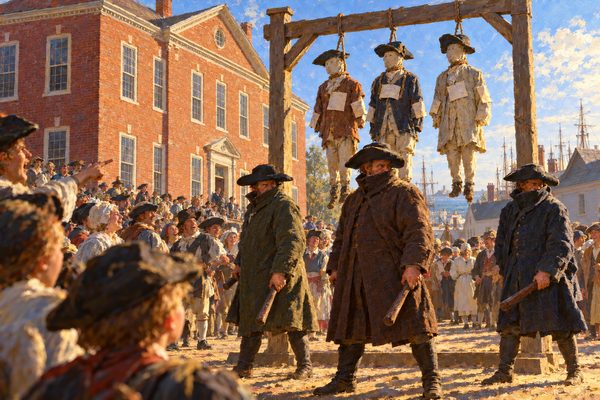
Rhode Island Responds
On 27 August 1765, Newport answered Boston.
Read chapter 23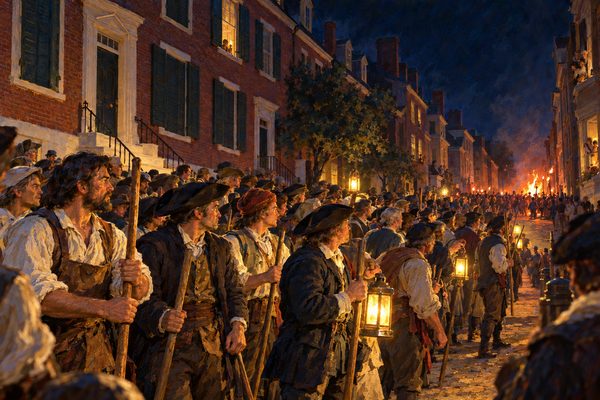
Response in Pennsylvania
John Hughes was Benjamin Franklin’s man in Pennsylvania, the stamp distributor Franklin had recommended from London, and he refused to resign.
Read chapter 27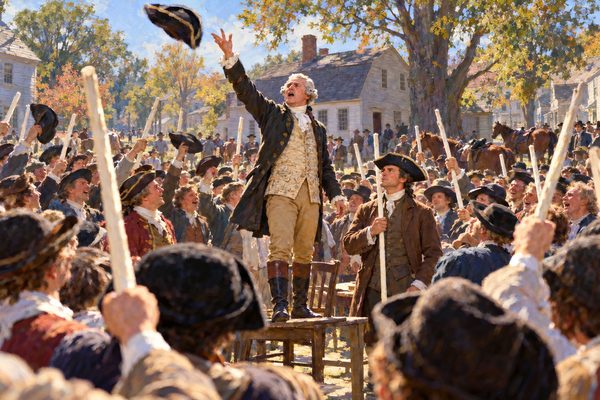
Response in Connecticut
On 19 September 1765 about five hundred riders from eastern Connecticut, each with a freshly peeled white staff, met the colony’s new stamp master, Jared Ingersoll, on the road to Hartford and turned him into Wethersfield.
Read chapter 26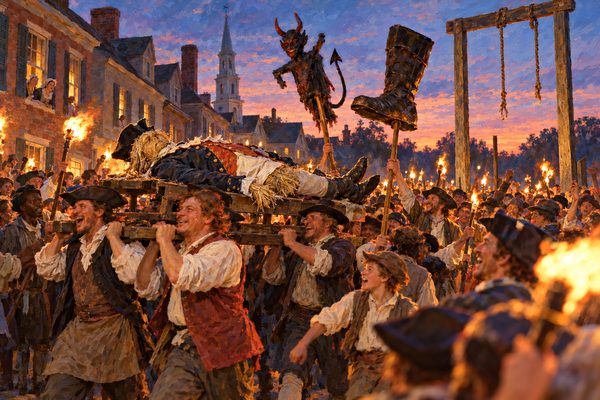
Response in the Carolinas and Georgia
Caleb Lloyd, South Carolina’s stamp distributor, stepped off the ship at Charleston on October 18, 1765, with the stamped paper, and Governor William Bull soon lamented that men’s minds had been “universally poisoned” with principles from Boston and Rhode Island.
Read chapter 28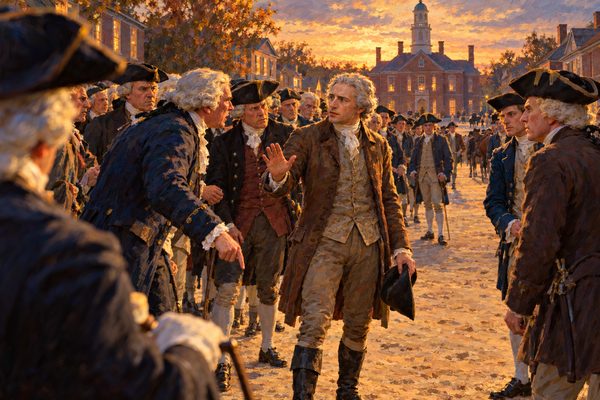
Response in Virginia
George Mercer was a Virginia planter and a former aide of George Washington.
Read chapter 25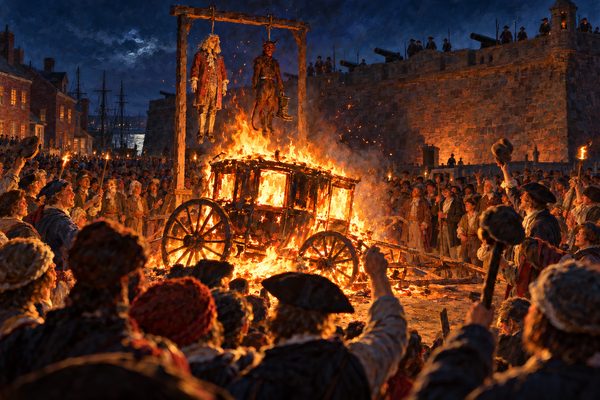
Response in New York
The stamped paper reached New York at the end of October 1765, and it found the city waiting.
Read chapter 24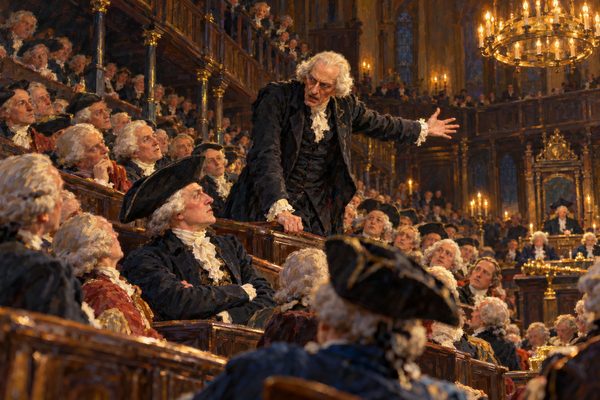
Repeal of the Stamp Act
Parliament opened on 14 January 1766 with the Grenville wing demanding that the Stamp Act be enforced, with troops if need be.
Read chapter 33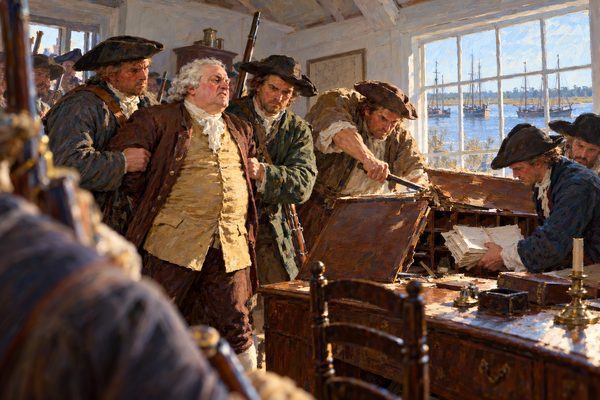
Ignoring the Stamp Tax
By January 1766 the ports of North America were opening, one customs official after another giving way to crowds.
Read chapter 31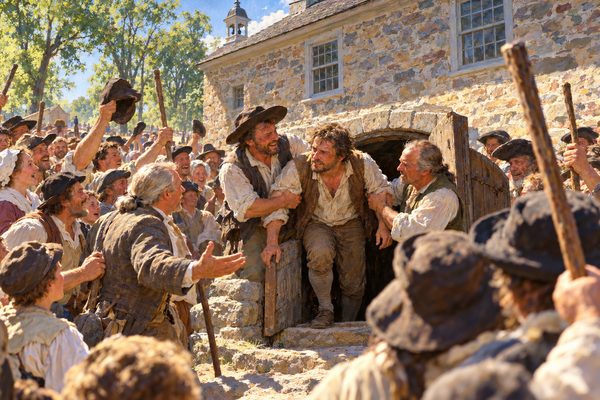
The New York Land Revolt
The rent war on the Hudson came to a head in 1766.
Read chapter 36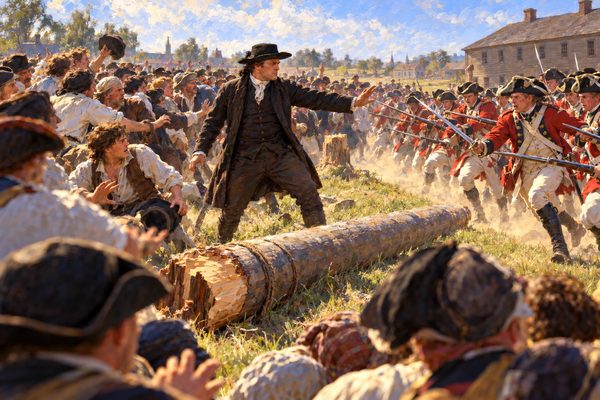
Aftermath of Repeal
New York’s Sons of Liberty raised their Liberty Pole on the Common in May 1766 to celebrate the repeal of the Stamp Act, a tall pine mast hung with a board for King George, Pitt and Liberty.
Read chapter 34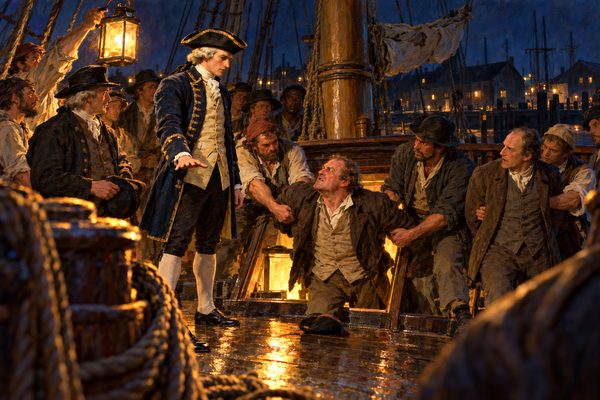
Conflict in Boston
On the evening of Saturday, 9 April 1768, two customs tidesmen, Owen Richards and Robert Jackson, stood guard as John Hancock’s brigantine Lydia unloaded.
Read chapter 39
Wilkes and Liberty: The Massacre of St. George’s Fields
John Wilkes came home from exile in early 1768, won the Middlesex election under the cry of “Wilkes and Liberty,” and was jailed in the King’s Bench Prison by Lord Mansfield.
Read chapter 40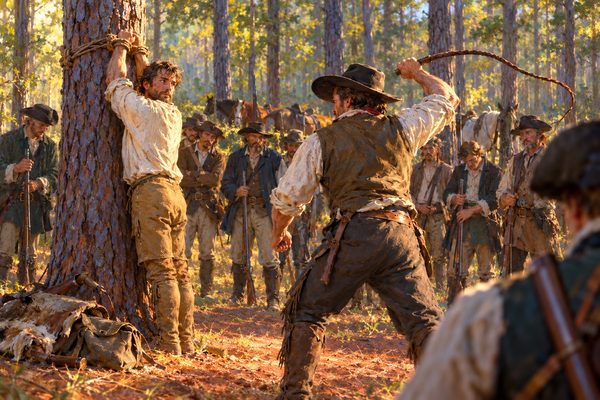
The South Carolina Regulation
The back country of South Carolina had no courts, no sheriffs and no police in the 1760s, and outlaw gangs plundered it at will.
Read chapter 50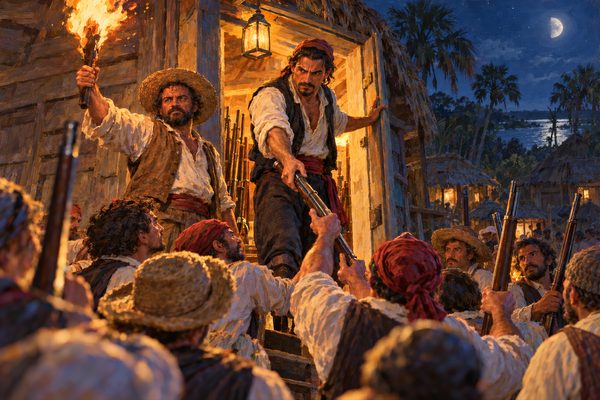
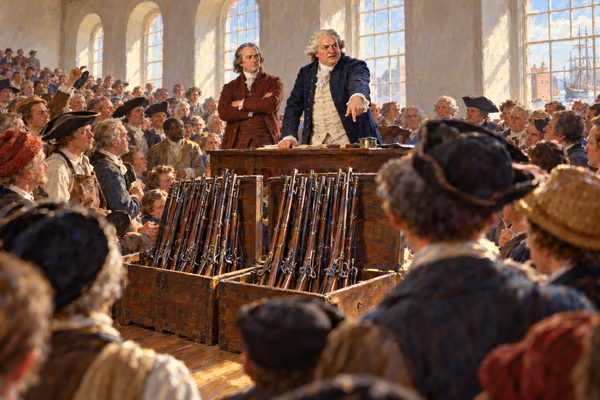
British Troops Occupy Boston
In the summer of 1768 Boston learned that British regiments were on their way.
Read chapter 41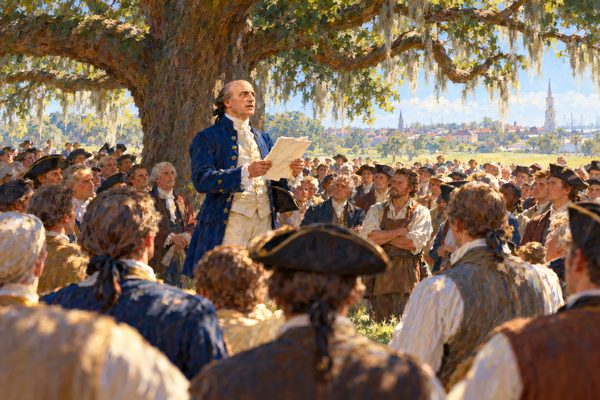
Nonimportation in the South
Charleston was the South’s biggest trading town, and in the spring of 1769 its merchants would not join the boycott of British goods that had swept Boston, New York and Philadelphia.
Read chapter 42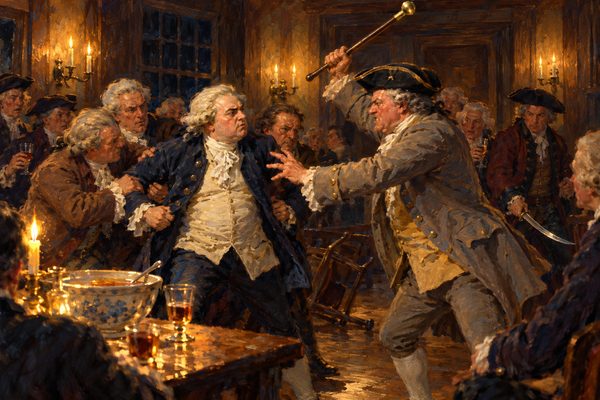
Boycotting the Importers
On 4 September 1769 James Otis printed a notice in the Boston Gazette attacking the customs commissioners, and said he had a natural right to break John Robinson’s head if Robinson misrepresented him.
Read chapter 44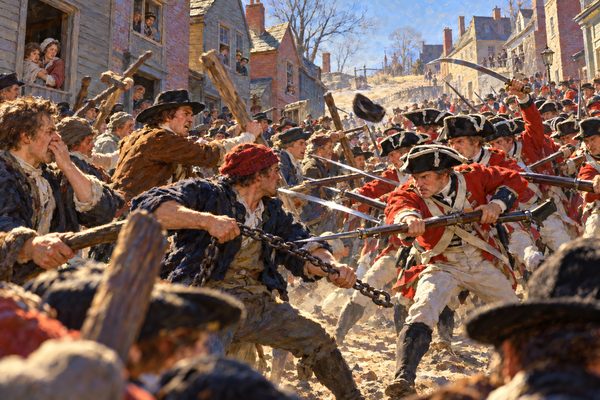
Conflict in New York
In January 1770 New York and its garrison were already at odds.
Read chapter 46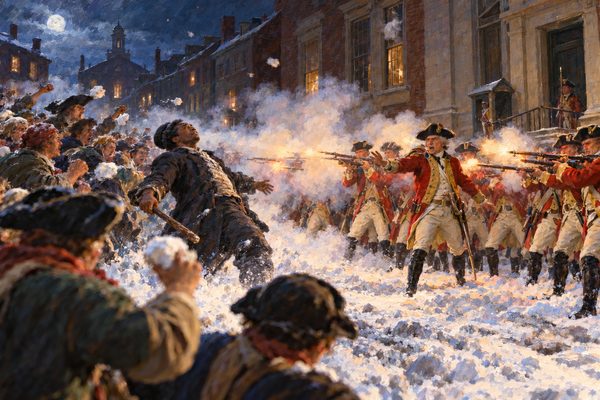
The Boston Massacre
British troops had been in Boston since late 1768, and the town had been waging a campaign against them for liberation.
Read chapter 45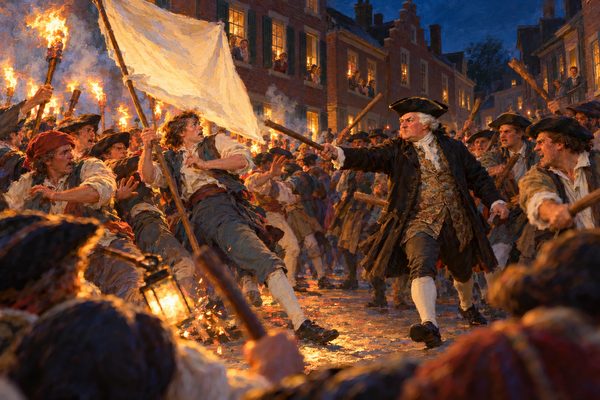
New York Breaks Nonimportation
By the summer of 1770 the boycott of British goods was the colonists’ great weapon, and New York was its weak link.
Read chapter 49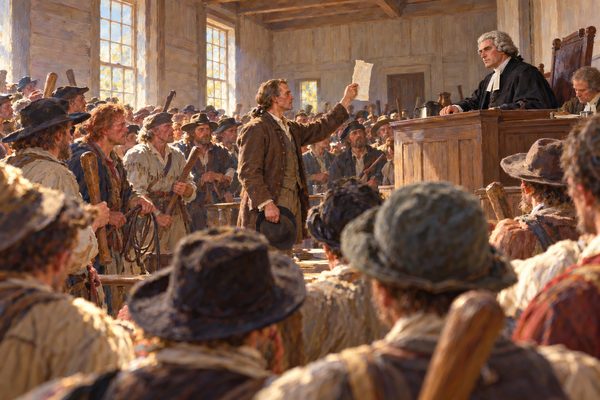
The North Carolina Regulation
By 1770 North Carolina’s Regulators had tried everything legal.
Read chapter 51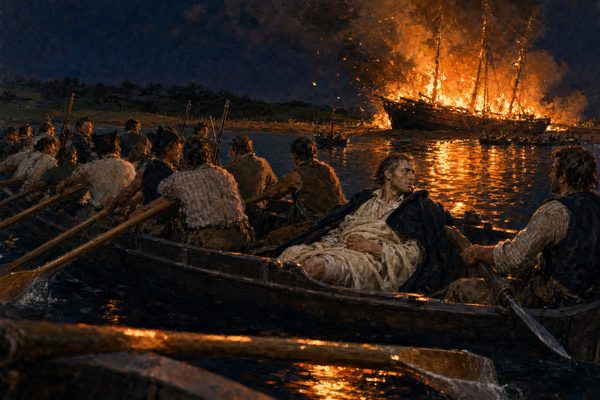
The Gaspee Incident
On the afternoon of 9 June 1772 HM schooner Gaspee, which had spent three months stopping and searching nearly every vessel in Narragansett Bay, ran aground on Namquid Point below Providence.
Read chapter 53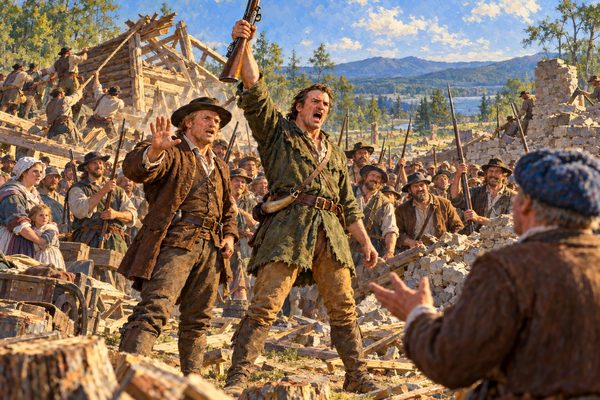
The Vermont Revolution: The Green Mountain Boys
In the 1760s settlers poured into the country west of the Green Mountains on land grants from New Hampshire, and paid for them.
Read chapter 71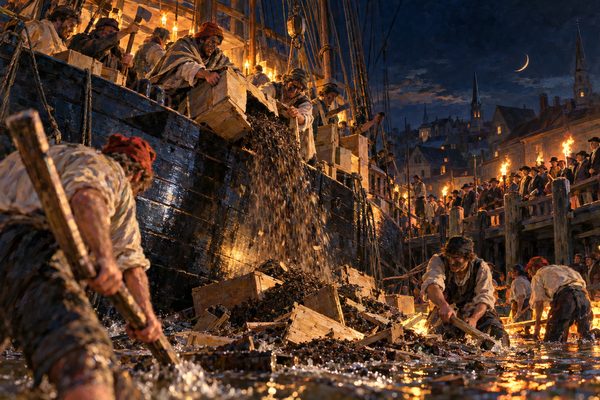
Boston protesters destroy East India Company tea
A blocked demand to return tea leads protesters to destroy the cargo.
Read chapter 56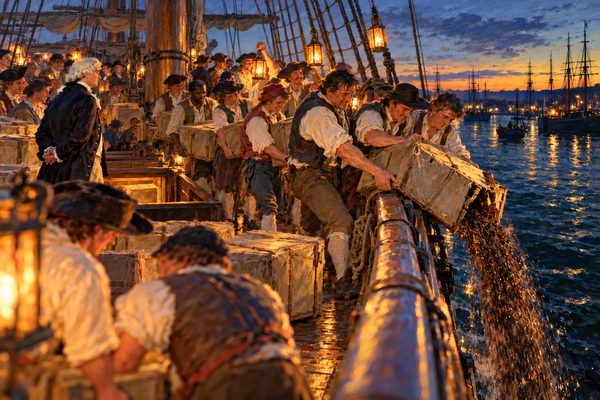
The Other Colonies Resist Tea
New York had prepared for the tea for months.
Read chapter 57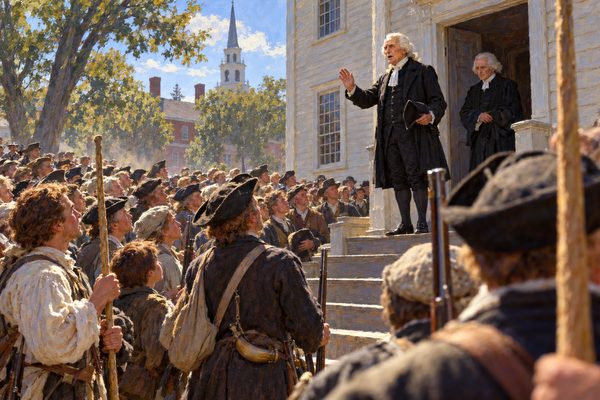
Resistance in Massachusetts
General Gage had spent the summer watching Massachusetts govern itself around him.
Read chapter 62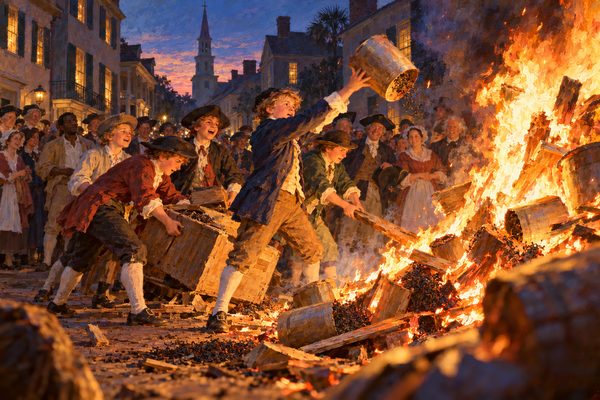
The Continental Association
Tea drinking, a favorite pastime of Americans, was the hardest part of the boycott to enforce.
Read chapter 64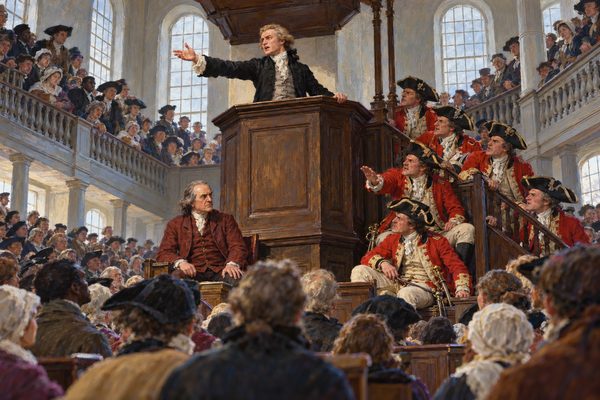
Massachusetts: Nearing the Final Conflict
Boston in March 1775 lived under the guns of the army that had occupied it since 1768.
Read chapter 67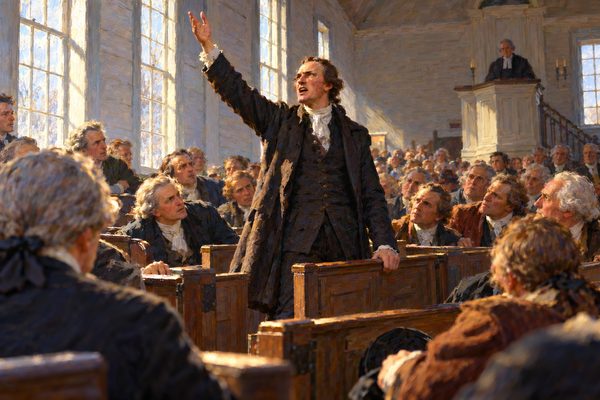
Support from Virginia
In late March 1775 the Virginia convention, an enlarged House of Burgesses meeting without the governor’s leave, met in St.
Read chapter 68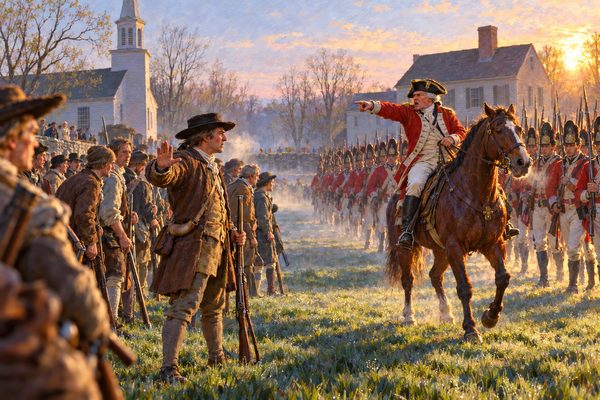
“The Shot Heard Round the World”: The Final Conflict Begins
General Gage had received his orders on 14 April and meant to strike first.
Read chapter 69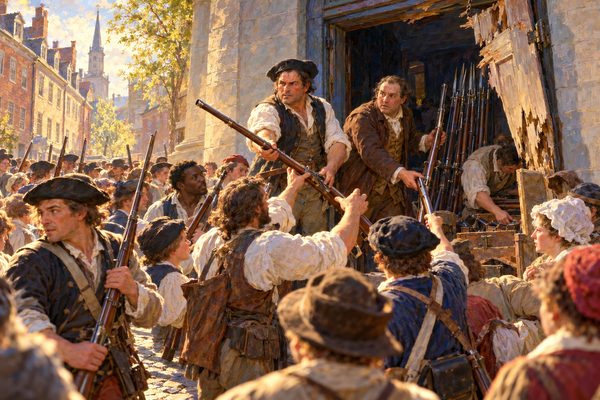
New York Fumbles in the Crisis
New Yorkers learned of Lexington and Concord on Sunday, April 23, and the city’s two radical leaders, Isaac Sears and John Lamb, seized the moment.
Read chapter 12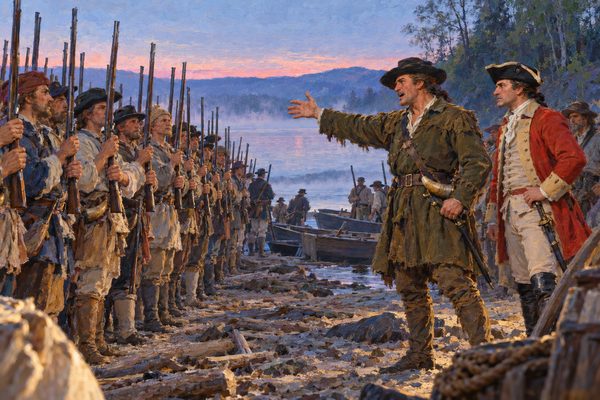
The Seizure of Fort Ticonderoga
Fort Ticonderoga sat at the narrows of Lake Champlain, the gateway to Canada and home to the largest store of cannon in the colonies.
Read chapter 4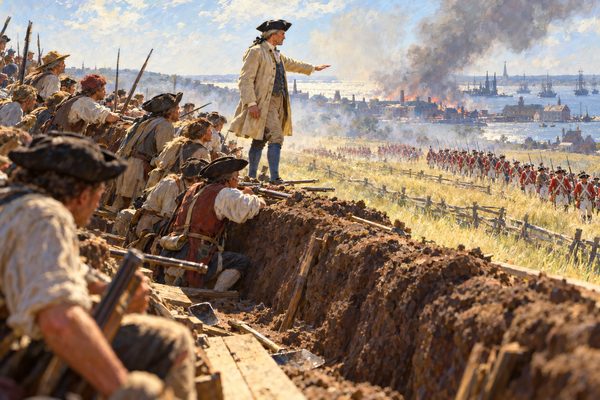
The Battle of Bunker Hill
By mid-June 1775 the Americans besieging Boston had learned that Britain meant to fortify the heights that commanded the town.
Read chapter 7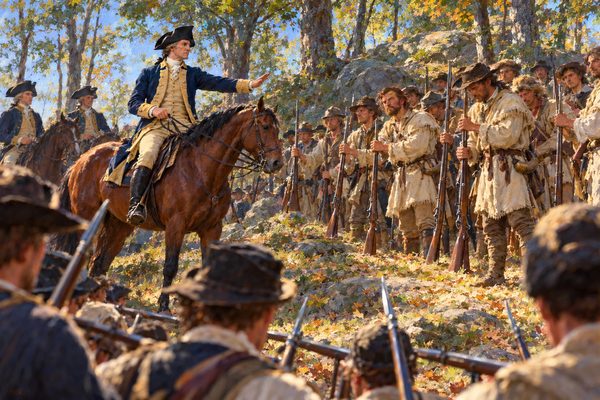
Washington Transforms the Army
When Washington reached Cambridge on July 2 he found a people’s army: its officers elected, its pay nearly level, its men free to come and go.
Read chapter 8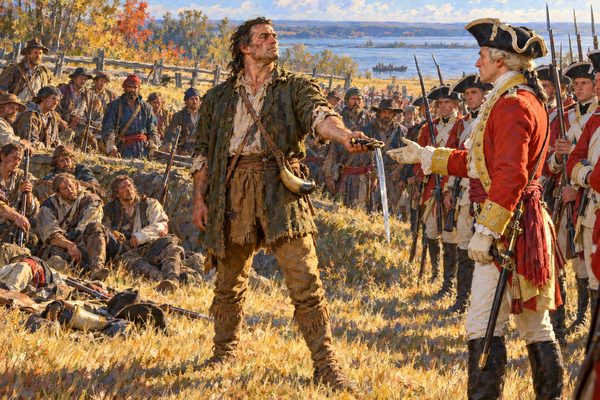
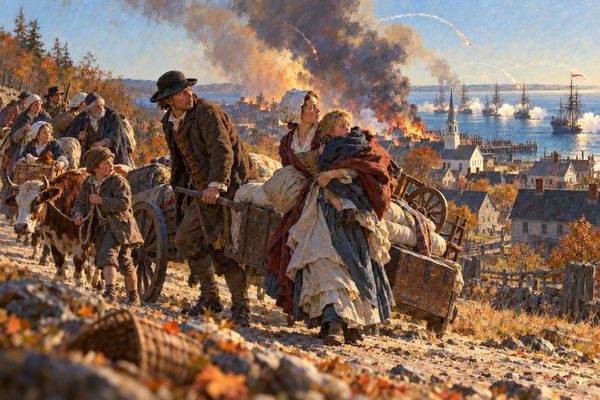
Privateering and the War at Sea
By the autumn of 1775 Admiral Graves at Boston could not stop the American schooners and whaleboats that were preying on his supply ships.
Read chapter 21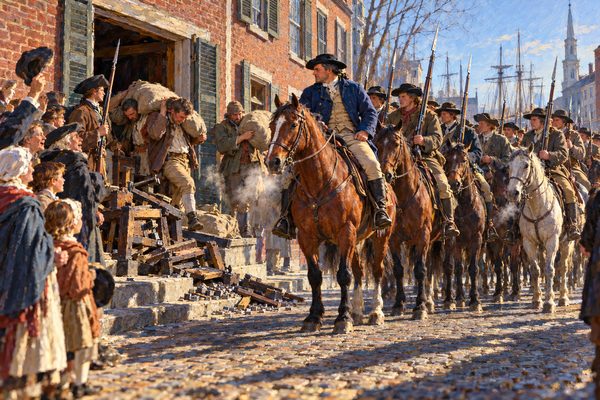
Suppressing Tories in New York
By the autumn of 1775 Isaac Sears, the old radical leader of New York, had left in disgust for Connecticut.
Read chapter 15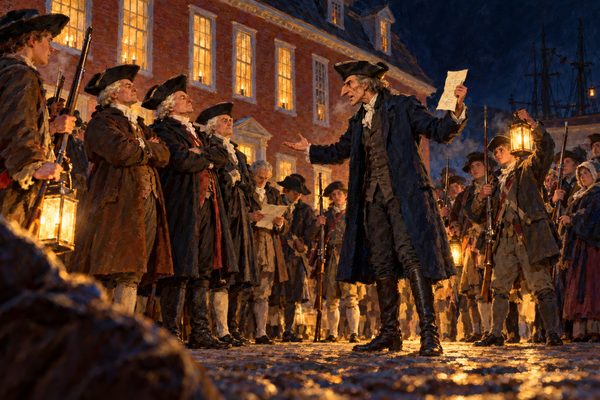
Suppressing Tories in Rhode Island and Connecticut
Newport swarmed with Loyalists, and by the autumn of 1775 it was a town under siege.
Read chapter 14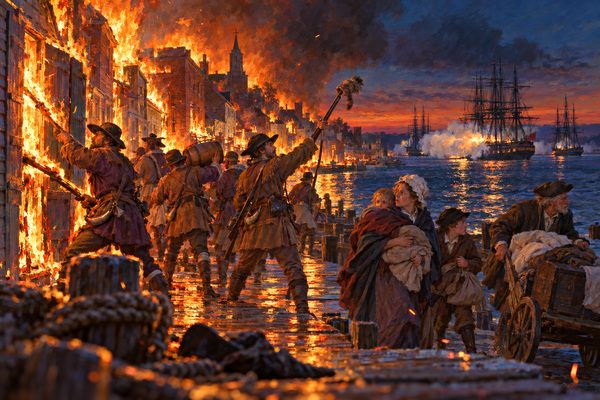
Virginia Battles Lord Dunmore
Norfolk was Virginia’s largest town, a port of about six thousand people, with Scottish merchants and their clerks, wharves and warehouses on the Elizabeth River, and a good many Tories.
Read chapter 17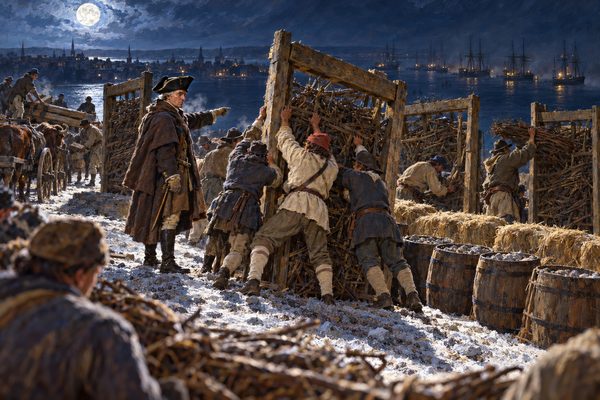
Forcing the British Out of Boston
By the winter of 1775 the siege of Boston had stalled.
Read chapter 20
The Struggle in Pennsylvania and Delaware
By the spring of 1776 Pennsylvania was the great holdout.
Read chapter 31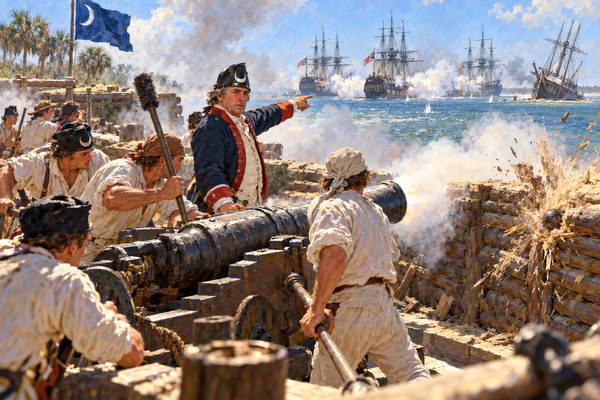
The British Assault on Charleston
In the spring of 1776 General Clinton, with three thousand regulars and a fleet of more than fifty warships under Commodore Sir Peter Parker, set out to take Charleston, or at least Fort Sullivan in its harbor, as a base for invading the whole South.
Read chapter 19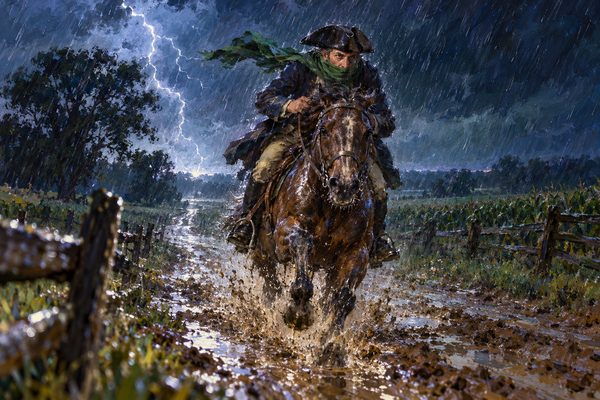
Caesar Rodney rides to vote for independence
A divided Delaware delegation awaits the representative whose presence can change its vote.
Read chapter 33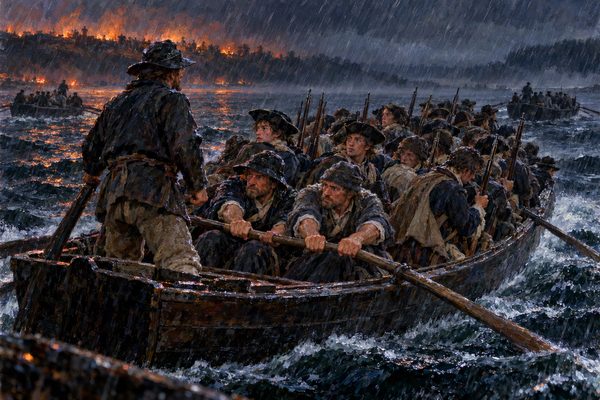
The Invasion of New York
By the last week of August 1776, William Howe had landed 20,000 men on Long Island, flanked the American line through the undefended Jamaica Pass and smashed it.
Read chapter 35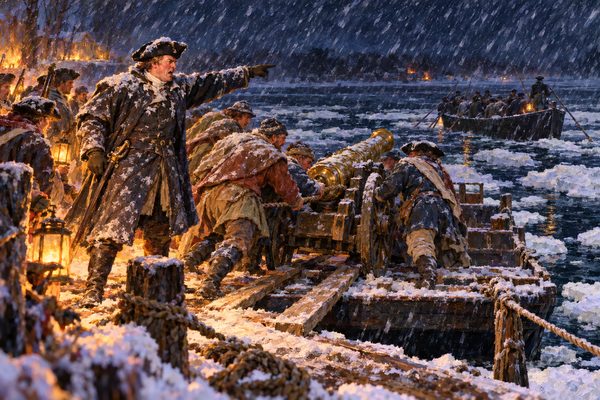
The Campaigns in New Jersey
By Christmas of 1776 Washington’s army had been chased out of New Jersey and was camped on the Pennsylvania bank of the Delaware, ill, barely clothed and about as low as an army can get.
Read chapter 36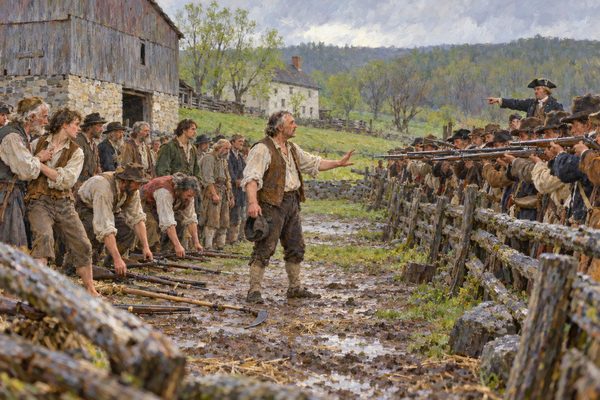
Rebellion at Livingston Manor
Livingston Manor ran for 160,000 acres along the east bank of the Hudson, and its tenants wanted one thing from the war: the land they had cleared and farmed for years.
Read chapter 38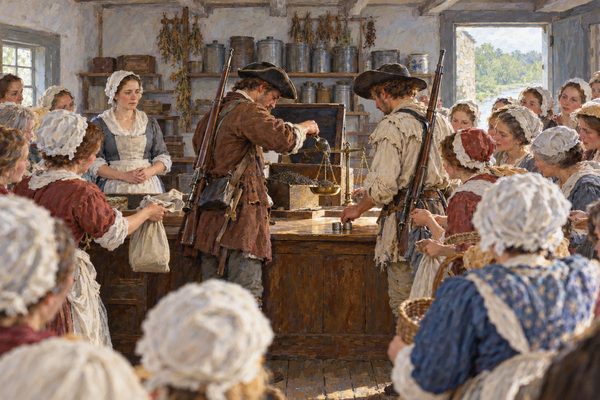
Inflationary Finance and Price Controls
Peter Messier was a New York City merchant with Loyalist leanings who fled the war and bought a stone house and 420 acres on Wappingers Creek, near Poughkeepsie, in May 1777.
Read chapter 67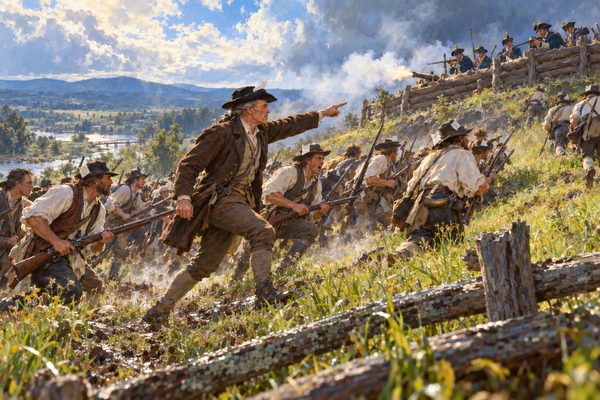
The Burgoyne Disaster
In August 1777 John Burgoyne, short of food and horses on his march south from Canada, sent about 700 men under the Hessian Lt.
Read chapter 39
Winter at Valley Forge
By December 1777 Washington had lost Philadelphia and his army needed a place to sit out the winter.
Read chapter 41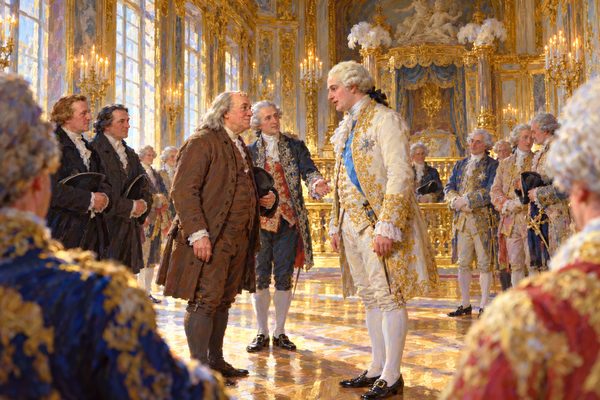
Response in Britain and France
For Americans, the great aim was to turn France from a secret supplier into an open ally.
Read chapter 43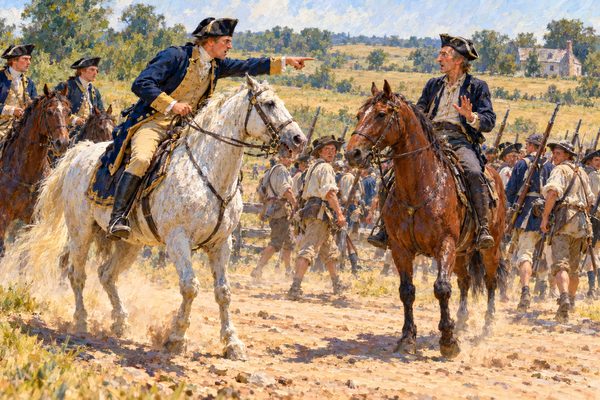
The Battle of Monmouth and the Ouster of Lee
The British had to get out of Philadelphia, and in June 1778 General Clinton marched ten thousand men across New Jersey toward New York, strung out and weighed down with baggage.
Read chapter 42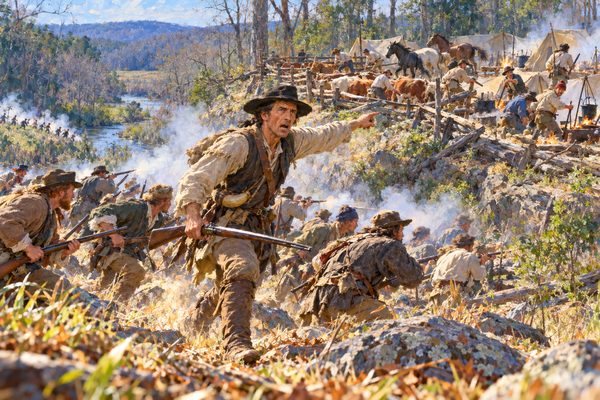
The Invasion of Georgia
On 23 December 1778 the British landed below Savannah, and by February all of Georgia was under their control.
Read chapter 53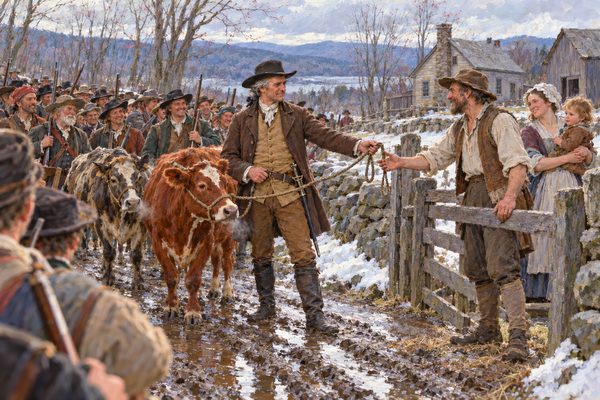
The Republic of Vermont
In 1779 Vermont was a republic that no other state recognized.
Read chapter 75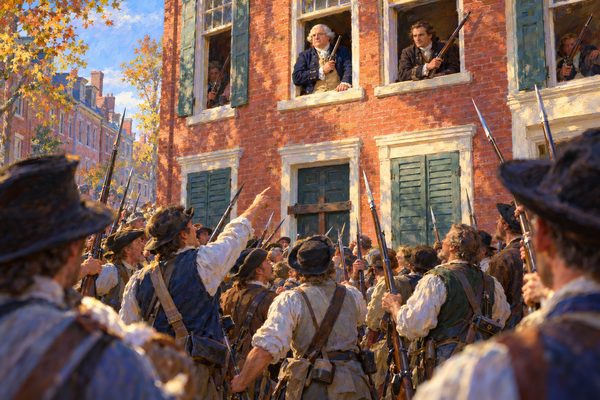
Conservative Counter-Revolution: Massachusetts and Pennsylvania in 1780
In 1779 Pennsylvania was run by radicals under its new democratic constitution, and the country was drowning in paper money and price controls.
Read chapter 68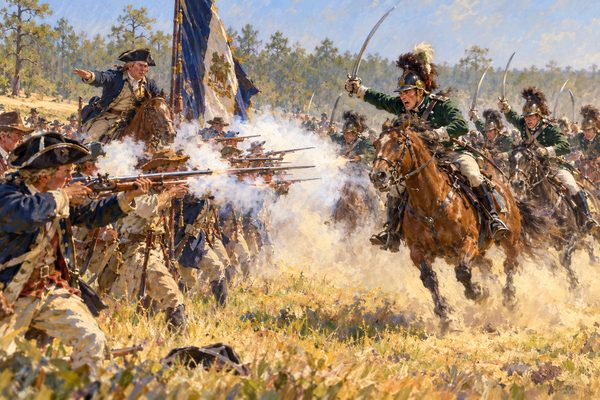
The Capture of Charleston
When Charleston fell on 12 May 1780, the whole southern army was lost, but one Continental force was still in the field: some 350 Virginians under Colonel Abraham Buford, who had come south too late to help and were ordered to retreat to North Carolina as fast as they could.
Read chapter 54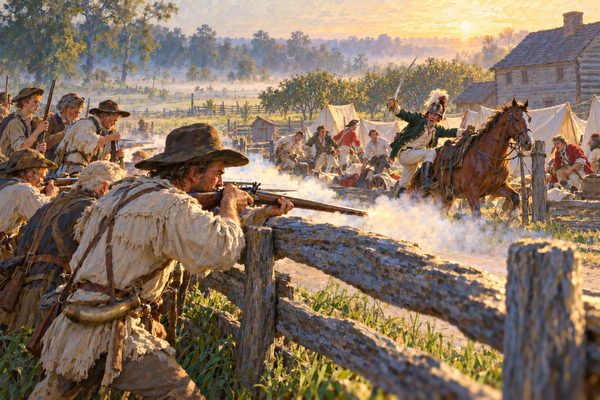
The Emergence of Guerrilla Warfare in South Carolina
After Charleston fell in May 1780, the British thought South Carolina was pacified.
Read chapter 55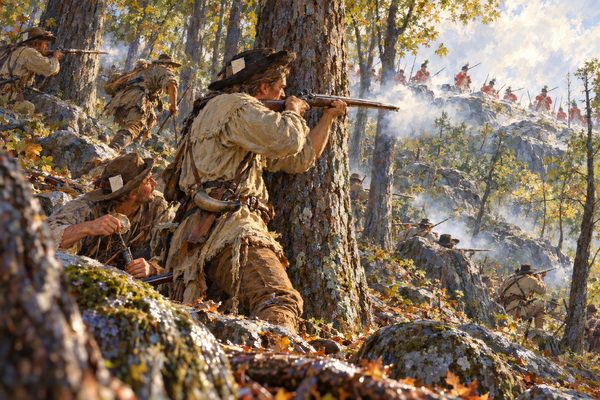
The Battle of King’s Mountain and the End of the 1780 Campaign
By late September 1780 the British thought the Carolina back country was theirs.
Read chapter 57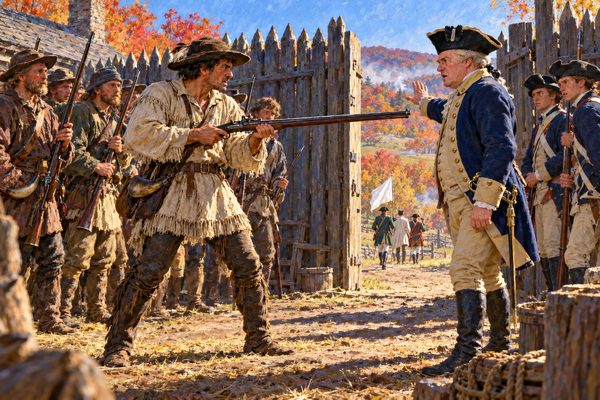
The War in the West
In October 1780 Sir John Johnson and Joseph Brant came down on the New York frontier with some 1,200 men, in step with a British thrust from Lake Champlain and the hope that Benedict Arnold would deliver West Point.
Read chapter 51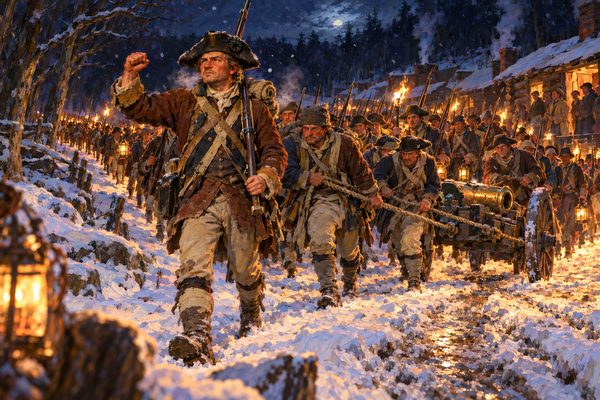
The Pennsylvania Line mutinies
Soldiers challenge military obedience over unpaid wages and disputed service terms.
Read chapter 49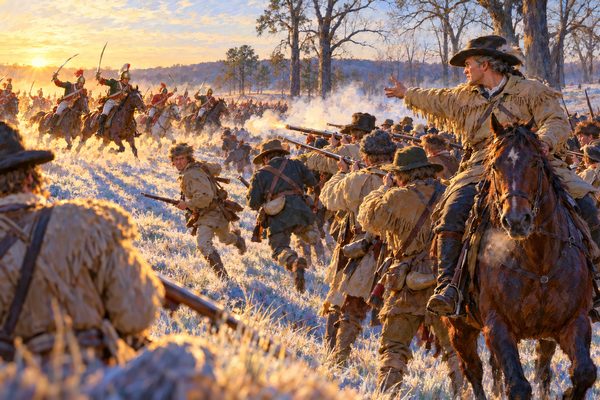
Greene’s Unorthodox Strategy
Rothbard says Greene, like Morgan, grasped “the necessity for a guerrilla strategy” and split his inferior army in “a daring and highly unorthodox maneuver” (p.
Read chapter 58
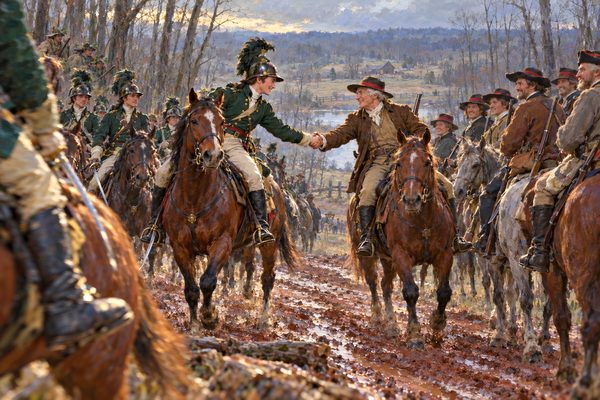
The Battle of Guilford Courthouse
After Greene’s army crossed the Dan, Cornwallis fell back to Hillsborough and on 20 February invited every loyal subject in North Carolina to join him.
Read chapter 60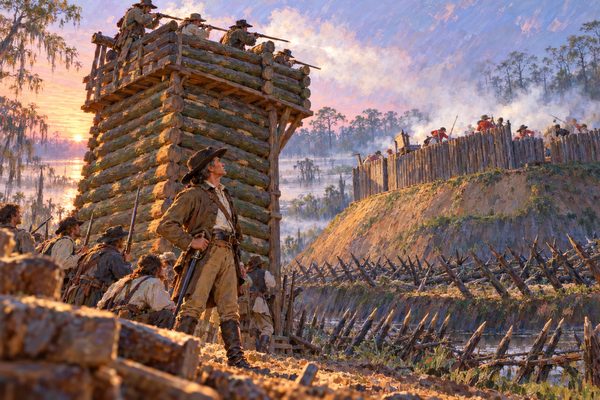
The Liberation of South Carolina
In April 1781 Greene sent Henry Lee’s Legion to join Francis Marion on the lower Santee, and on the 14th they laid siege to Fort Watson.
Read chapter 61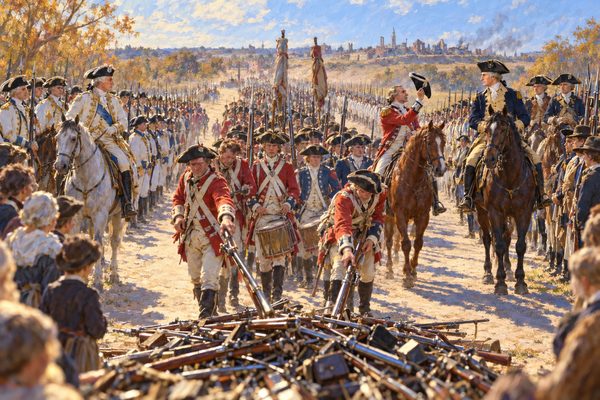
The Final Battle
In the summer of 1781 Cornwallis marched his army into Virginia and, on Clinton’s orders, dug in at Yorktown on the York River.
Read chapter 62
After Yorktown in the West
The Moravian mission towns on the Tuscarawas River, Gnadenhutten among them, were home to Delaware Indians who had become Christians and given up war.
Read chapter 63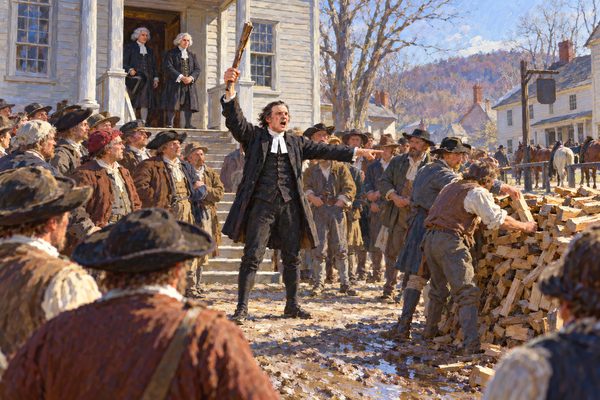
The Burdens of State Public Debt
In 1782 Massachusetts was collecting about a third of a farmer’s income in hard-money taxes to pay a war debt that had passed from soldiers into the hands of speculators, and the courts threw those who could not pay into jail.
Read chapter 4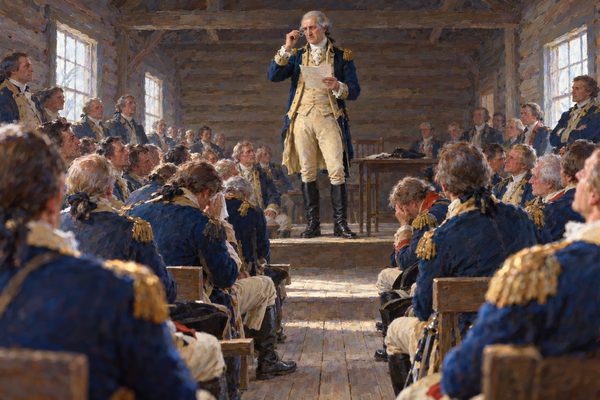
The Newburgh Conspiracy
By the winter of 1783 the war was won and the army was unpaid.
Read chapter 72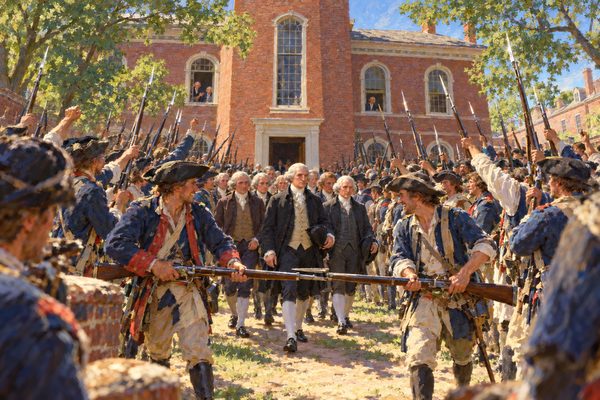
The Fall of Morris and the Emergence of the Order of the Cincinnati
The war was over and the army was unpaid.
Read chapter 73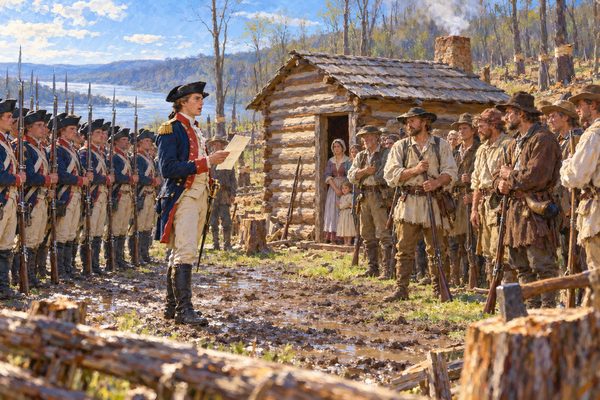
The Old Northwest
By 1785 Congress had made the western lands its own and meant to survey them and sell them for revenue, a dollar an acre.
Read chapter 7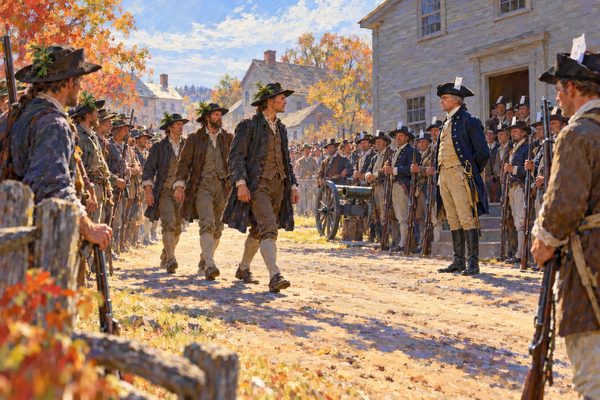
Shays’ Rebellion
By the autumn of 1786 the farmers of western Massachusetts had spent two years being taxed and sued.
Read chapter 11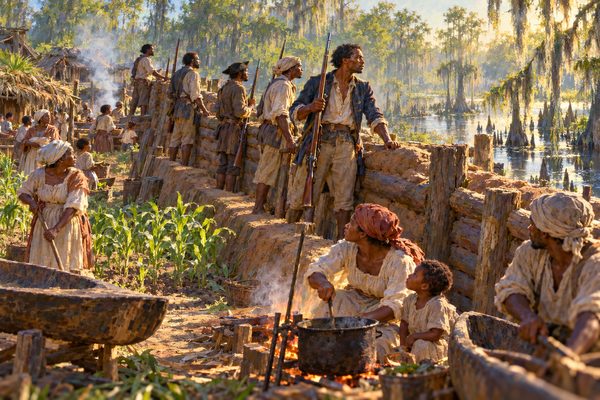
Elimination of Feudalism and the Beginnings of the Abolition of Slavery
When the British left Savannah in 1782, about 4,000 escaped slaves sailed with them, and 6,000 more left Charleston.
Read chapter 78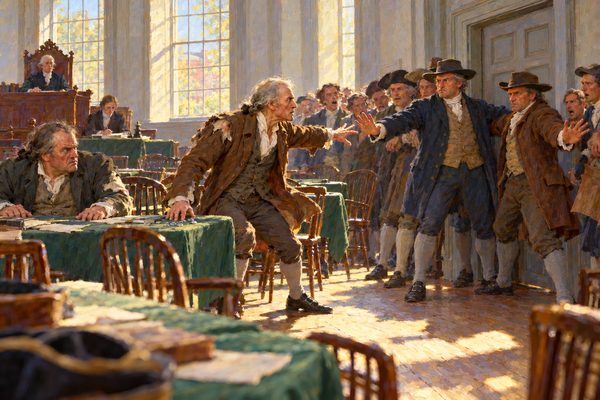
Absent Pennsylvania legislators are forced into the Assembly
A forced quorum permits Pennsylvania’s Assembly to proceed toward a ratifying convention.
Read chapter 25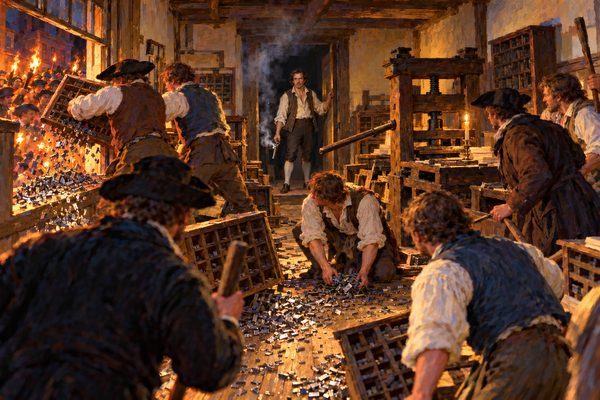
The Battle for New York and the Twilight of the Antifederalists
Thomas Greenleaf’s New-York Journal was the one paper in the city still open to Antifederal writers.
Read chapter 33